Is the Dell KB216 keyboard worth it?
Worth it if you just want a keyboard that works
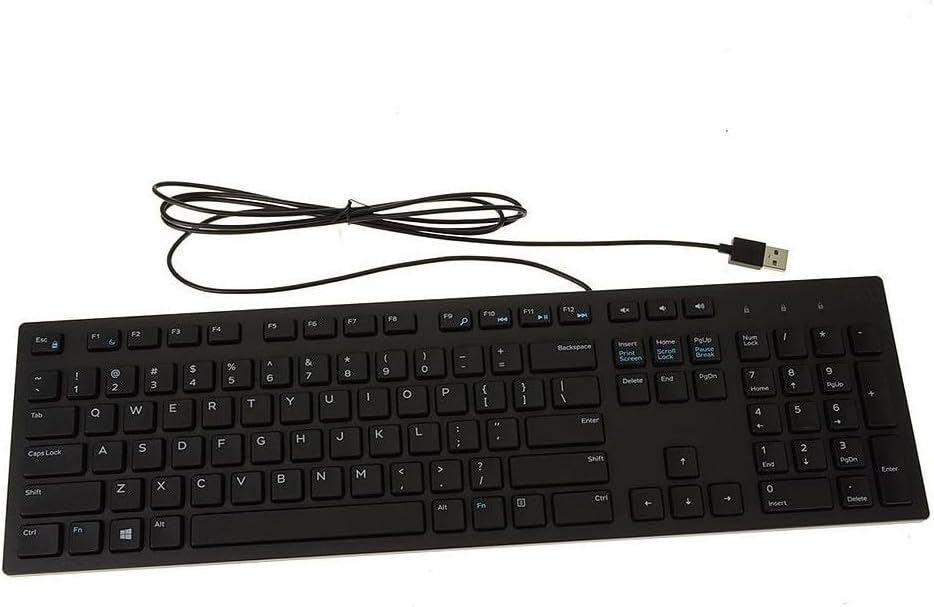
Why a cheap wired keyboard feels like a gamble
You sit down at a desk that isn't yours, maybe a loaner PC, maybe a spare office machine, and the keyboard underneath your fingers feels like a lottery. Sometimes it's mushy and dead, sometimes it clacks like a typewriter and annoys everyone nearby. You just want the thing to disappear and let you type, which is exactly the question hanging over a fifteen dollar Dell KB216 review: can something this plain actually be good, or is it just cheap?
How the Dell KB216's plunger keys actually work
Here's the part the listing doesn't spell out. Under each chiclet key on the KB216 sits a plunger and a rubber dome, not a mechanical switch. When you press down, the plunger travels straight into that dome, the dome collapses to complete the contact, then springs back. That collapse is soft and short-travel by design, which is why the whole board is quiet and why it feels closer to a laptop keyboard than a clacky mechanical one. There's no dampening foam or tuning trick here, the quiet is just a side effect of how a membrane keyboard works. Plug the USB cord in and it's live instantly, no pairing, no batteries, no drivers to hunt down, because a wired connection has nothing to negotiate. The multimedia row along the top taps into your OS's existing volume and playback controls rather than needing its own software, so play, mute, and fast forward just work the moment Windows recognizes the device. Add the full 104 key layout with a number pad, and you've got a board built for spreadsheets and forms, not competitive typing speed records.
You're not buying a premium typing experience here, you're buying infrastructure that gets out of your way. The quiet isn't a feature they engineered, it's just what a plunger and dome switch sounds like, and the instant plug and play isn't a feature either, it's just what wired means. That's the whole trick: nothing to configure is worth more than most people realize.
Who the Dell KB216 is for, and who should skip it
Worth it if
- You want a desktop keyboard that plugs in and works with zero setup
- You'd rather have quiet keys than clicky ones
- You need a full-size layout with a number pad for everyday office work
Skip it if
- You type for hours a day and want a tactile or mechanical switch feel
- You need a wireless setup for a tidy desk
- You're gaming and want fast, responsive key travel
Not for anyone who wants a tactile or mechanical typing feel, or heavy daily typists who'll push the switches hard for years.
The Dell KB216 verdict
If you want a keyboard for a home office, a kid's desktop, or a spare machine that just needs to type reliably, this is a quiet yes. If you're a heavy typist chasing tactile feedback, or you lean on a keyboard for hours of gaming, the soft membrane feel and the long-term wear on any budget dome switch mean you'll want to look at mechanical boards instead.
Amazon shoppers rate it 4.6 out of 5 across 41,166 ratings. That is their number, not ours.
Before you go
Is the Dell KB216 a good keyboard?
Yes, for everyday typing and office use—it's quiet, plug-and-play, and has a full layout with number pad, though not built for fast gaming or heavy mechanical-style typing.
Does the Dell KB216 have a number pad?
Yes, it has a full 104-key layout with a dedicated number pad.
By the numbers
earn an unconditional yes at full priceOut of 153 electronics products we have reviewed. This one is a yes with a condition attached.
Verdict datasetQuestion indexCC BY 4.0
Full spec sheet
| Connectivity Technology | Wired |
|---|---|
| Other Special Features of the Product | Ergonomic |
| Compatible Devices | Personal Computer |
| Power Source | Corded Electric |
| Keyboard Layout | QWERTY |
| Number of Batteries | 2 AAA batteries required. |
| Compatible Operating System Family | Windows |
| Minimum Required Operating System Version | Windows 10 |
Head to head
Keep comparing


More electronics reviews.