Wired vs Wireless Keyboard: Which One Should You Buy?
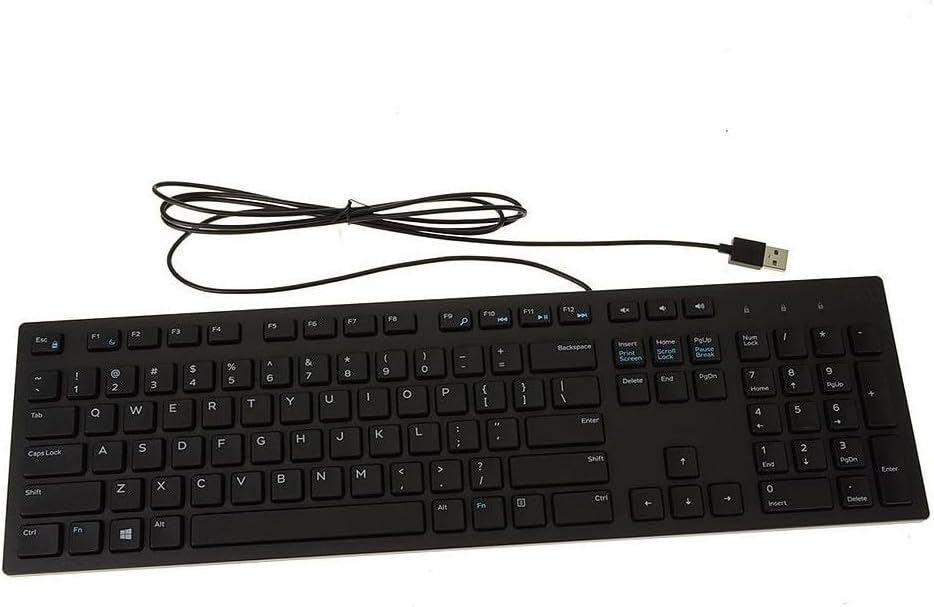
Dell Wired Keyboard KB216
Worth it if you just want a keyboard that works
- You want a desktop keyboard that plugs in and works with zero setup
- You'd rather have quiet keys than clicky ones
- You need a full-size layout with a number pad for everyday office work

Logitech MK270 Full Size Wireless Keyboard and Mouse Combo - Black
Worth it, if you're grading on 'reliable', not 'great'
- you just need a keyboard and mouse that pair themselves and get out of the way
- you're setting up a spare desk, dorm, or backup machine and don't want to think about it
- you want months of battery life without swapping cells constantly
By the numbers: both score 4/5 on our verdict scale — the split here is audience, not quality. Full dataset.
Wired vs Wireless Keyboard
You're standing at the point every desk setup hits eventually: wired vs wireless keyboard, and the marketing on both sides oversells the decision. One plugs in and works. The other trades a cable for a receiver and a battery. Neither is solving a problem you don't already have, they're just solving different ones. The real question isn't which is newer, it's which annoyance you'd rather live with, a cord on your desk or a battery you have to think about twice a year.
A wired keyboard like the Dell KB216 does one thing: the USB connection is the whole product. Plug it in, it works, no pairing, no receiver, no battery to die mid-email. That reliability isn't engineering, it's just what a cable guarantees by nature. The cost is exactly one cable running across your desk.
A wireless combo like the Logitech MK270 adds a small USB receiver and a battery compartment to remove that cable. The receiver does the pairing once, then gets out of the way, and the battery lasts months, not days, so it's not the constant chore people assume. What you're actually buying with wireless isn't performance, it's a cleaner desk. What you're risking, however small, is the one extra point of failure a cord never had: a receiver that unplugs, a battery that dies at the wrong moment.
Neither changes how the keys feel. Both are membrane switches under the hood, and that's the ceiling for both, not just one.
Choose the wired keyboard if
- You want zero setup, plug in and it works, no pairing step
- You'd rather have quiet keys than clicky ones
- You need a full-size layout with a number pad for office work
- You don't want a battery in the equation, ever
Choose the wireless keyboard if
- You want the cable gone and a tidier desk more than you want simplicity
- You need a keyboard and mouse that pair themselves out of the box
- You're setting up a spare desk, dorm, or backup machine
- You want months of battery life without constant swapping
Both of these are budget picks doing a budget job well, and both reviews say so plainly. The Dell is infrastructure, it just works and disappears. The Logitech is the same promise with the cord removed, at the cost of one small point of failure a wired board doesn't have. Neither is built for eight-hour typing days or gaming. If you want the simplest possible yes, take the wired one. If a clean desk matters more to you than removing every variable, the wireless combo earns its keep too.
Before you go
Does a wireless keyboard lag behind a wired one?
No, not at this price point for typing or browsing. The receiver and battery are doing the heavy lifting here, not the keys, so lag isn't the real risk, worn switches over time are.
Will I need to keep swapping batteries on a wireless keyboard?
No, the MK270 gets months out of a set, not days. Budget it as an occasional swap, not something you'll think about weekly.
Which one should I get for gaming?
Neither, honestly. Both are budget membrane boards built for typing, not fast key travel, so gaming is where you hand off to a mechanical board instead.
Full verdicts: Dell Wired Keyboard KB216 · Logitech MK270 Full Size Wireless Keyboard and Mouse Combo - Black