Are FRAM Oil Filters Any Good?
Worth it, if the fitment and oil type line up
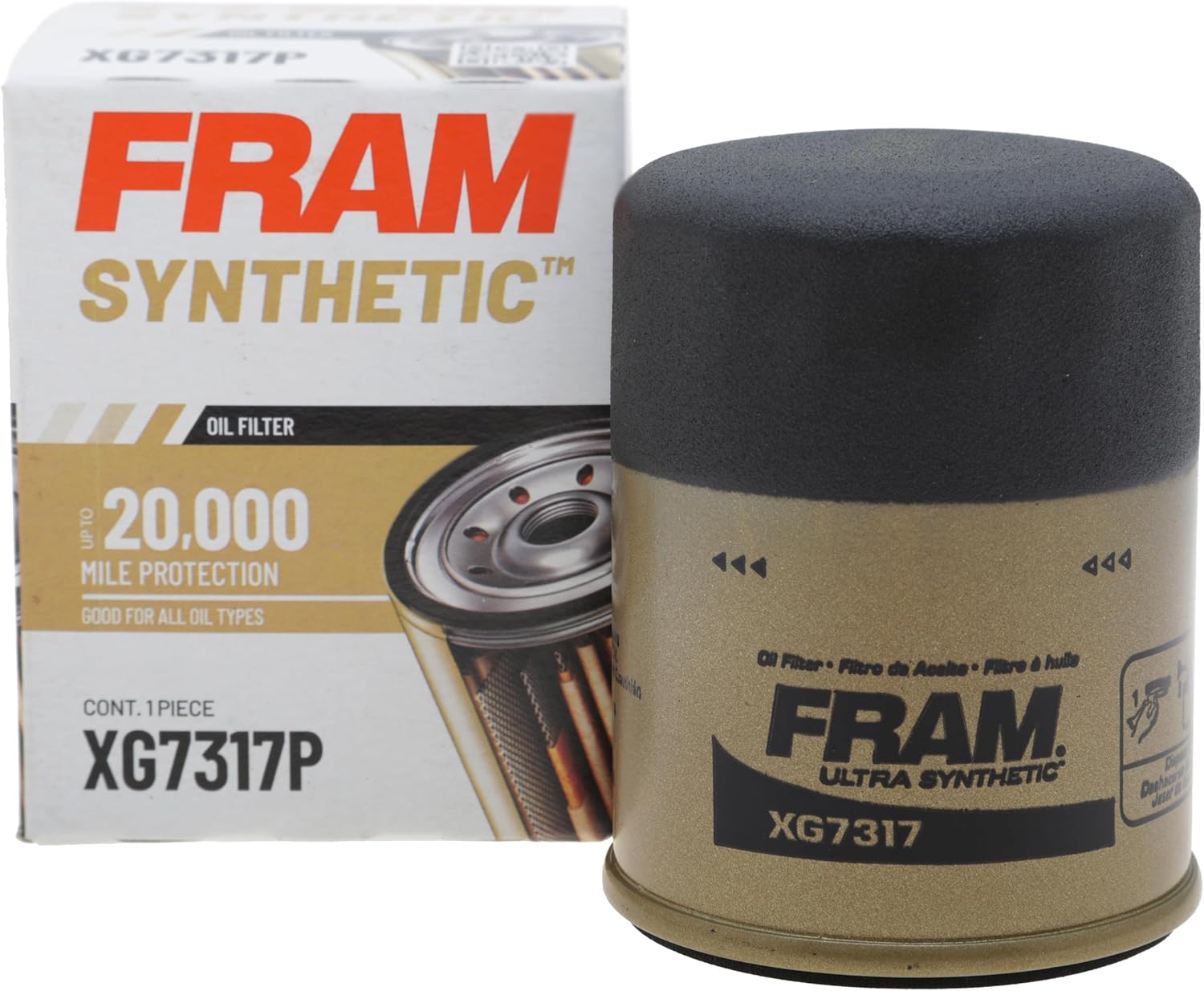
Why the oil filter you can't see still worries you
You're on your back under the car, drain pan catching the last of the old oil, and you crack the filter loose with one hand cupped underneath so it doesn't spill down your arm. It comes off warm and a little slick, and you hold the new one up next to it before you thread it on, checking the gasket seats flush against the block. That's the moment the question about whether Fram oil filters are any good actually matters, not when you're standing in the parts aisle reading the box. Under the car, the only thing that counts is whether what you're about to screw in place will still be doing its job at mile fifteen thousand.
How the FRAM synthetic filter actually protects a 20,000 mile oil change
Check fitment before you check the reputation. This filter is a M20 x 1.5 thread, sized for a specific run of applications, and the thread and gasket diameter are what actually determine whether an oil filter does its job, not the brand printed on the can. Inside, FRAM built this one with dual-layer synthetic media instead of the cellulose paper you'll find in a basic filter. Cellulose media has bigger pores, so it lets more of the fine stuff through as the filter loads up with contaminants. Synthetic media holds a tighter pleat structure that keeps clamping down on smaller particles for longer, which is the whole reason FRAM rates this one for 20,000 miles instead of the usual 3,000 to 5,000. That number only holds if you're actually running full synthetic oil, because synthetic oil breaks down slower and doesn't need the filter changed as often to keep pace with it. Put a filter rated for synthetic on top of conventional oil and you've mismatched the two halves of the system. The other piece worth knowing is the silicone non-drain back valve. On a lot of engines, oil drains out of the filter and back into the pan overnight, which is why a cold start runs dry for a second or two before oil pressure builds. A non-drain back valve holds that oil up in the filter housing between drives, so the first few seconds of a cold morning start aren't running on fumes. The SureGrip texture on the outside is smaller stuff: it just means you can hand-tighten the thing without the shop rag and the swearing.
So the filter isn't really the product, the media and the valve are. Pay for those two things and the can they're welded into is just packaging. That's the honest trade: a filter built to this spec is worth the extra few dollars over the bargain-bin cellulose version, as long as the oil in the crankcase is actually synthetic.
Who the FRAM XG7317P filter is for, and who should skip it
Worth it if
- you already run full synthetic oil on an extended change interval
- you've confirmed the M20 x 1.5 thread and gasket size match your vehicle
- you're comfortable hand-tightening a filter yourself
Skip it if
- you're still running conventional oil on a short change interval
- your vehicle isn't in FRAM's listed fitment for this filter
- you want an OEM-exact filter for a warranty-sensitive vehicle
Not for conventional-oil, short-interval drivers or vehicles outside FRAM's listed fitment.
Are FRAM oil filters any good, the verdict
If you're running full synthetic oil on a schedule stretched past five thousand miles, and you've already confirmed the thread and gasket size against your engine, this is a straightforward yes. If you're still on conventional oil changed every three thousand miles, or your vehicle calls for a filter FRAM doesn't list for it, save the upgrade and buy the filter that actually matches what's under the hood.
That mismatched, is-it-actually-protecting-anything feeling under the car goes away once the numbers line up: right thread, right gasket, synthetic oil in the pan. Day one, it just threads on clean, hand-tight, no rag needed, and you stop thinking about it until the next change. A large number of owners running this on daily drivers report it holding up fine against full synthetic oil without leaks, though a handful have seen it age differently over the long haul depending on the engine. Either way, the filter isn't the part of this job you need to stress about.
Amazon shoppers rate it 4.7 out of 5 across 9,757 ratings. That is their number, not ours.
Before you go
What oil filter is considered the best?
There's no single best filter, it depends on your oil type and change interval, but a filter with multi-layer synthetic media rated for the miles you're actually driving between changes is the right benchmark to judge any brand against.
Which oil filter is better, Fram or mobil one?
Both make synthetic-media filters built for extended change intervals, so the more useful comparison is between this FRAM Ultra Synthetic tier and Mobil 1's equivalent tier, not FRAM's whole catalog against Mobil 1's whole catalog.
Why do Fram oil filters have a bad reputation?
The reputation mostly traces back to FRAM's older, cheaper filters, which used thinner cellulose media and lighter cans that looked bad next to premium filters when people cut them open, the synthetic-media line is a different build entirely.
Why not use Fram oil filters?
The main reason to skip them is fitment or oil mismatch rather than the brand itself, if your engine isn't in FRAM's listed applications or you're not running the oil type this tier is designed for, a different filter is the safer call.
By the numbers
earn an unconditional yes at full priceOut of 137 automotive products we have reviewed. This one is a yes with a condition attached.
Verdict datasetQuestion indexCC BY 4.0
Full spec sheet
| Brand Name | Fram |
|---|---|
| Manufacturer Part Number | XG7317P |
| Unit Count | 1 Count |
| Number of Packs | 1 |
| Number of Items | 1 |
| Included Components | FRAM Oil Filter |
| Item Type Name | FRAM Ultra Synthetic Oil Filter |
| Model Number | XG7317 |
Keep comparing



More automotive reviews.