Is a thermal printer worth it?
Worth it if
A thermal printer is worth it if you ship packages weekly and want dedicated black-and-white labels without reordering ink or toner. It makes less sense for occasional shipping or anyone who needs color printing.
Skip it if
Skip a thermal printer if you print only one or two labels a month, need color labels or graphics, or do not want a second dedicated device. An inkjet is the more flexible choice for mixed documents.
Related product reviews to help you decide
$70–$100 across these picks, at time of writing

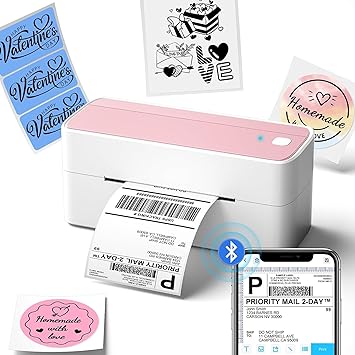
How a thermal printer changes the shipping-label job
The marketing skips this part: a thermal printer does not spray liquid ink onto paper. It uses heat to create the printed image on heat-sensitive media, so the machine is built around a narrow job rather than general document printing. For shipping, that usually means feeding a standard label, sending the file from a phone or computer, and getting a black-and-white label without an ink cartridge in the process.
That changes the ownership question. The recurring thing to manage is the label stock, not ink or toner, and the device can stay set up for a regular label format. If you ship through USPS, UPS, Amazon, Etsy, Shopify, or similar services every week, removing a cartridge reorder and a separate paper-cutting step can make the dedicated format useful.
The trade is scope. A shipping-label thermal printer is not a general replacement for an inkjet: it is a focused tool for labels and other compatible black-and-white output. Thermal prints can also be affected by heat and light over time, so they are a poor fit for color branding or anything that needs the flexibility of ordinary paper printing. Here's where your money actually goes: less versatility in exchange for a simpler repeated task.
It earns its place for
- People shipping packages weekly
- Sellers using USPS, UPS, Amazon, Etsy, Shopify, or similar platforms
- Anyone tired of reordering ink or toner for labels
- Buyers who want a dedicated black-and-white label device
- People comfortable managing a second printer
Save your money if
- You print only one or two labels a month
- You need color labels or branding graphics
- You need one printer for labels and general documents
- You do not want to manage a separate dedicated device
The useful calculation is frequency: weekly label printing gives a dedicated device many more chances to replace inkjet label sheets and cartridge handling than one or two labels a month. If shipping is occasional, that replacement is too small to justify another machine.
Before you decide
What are the disadvantages of a thermal printer?
Thermal printers are limited for general use: shipping models produce black-and-white output, need compatible label stock, and add a dedicated device if you already own an inkjet.
How long will thermal prints last?
Thermal prints can be affected by heat and light over time, so they are better suited to shipping labels and short-term identification than records where long-term appearance matters.
Which is better, an inkjet or a thermal printer?
Yes, a thermal printer is better for frequent black-and-white shipping labels; an inkjet is better if you need color, general documents, or one printer for varied tasks.
Does a thermal printer ever run out of ink?
No, thermal printers do not use liquid ink or toner; they create images with heat on compatible media, so you manage label stock instead.
A thermal printer is worth it when shipping labels are a weekly task and black-and-white output is all you need. Its ink-free printing and dedicated label format address a specific bit of friction, not every home-printing need. Skip it for occasional shipping, color work, or mixed documents, where an inkjet remains more flexible. The flat answer is simple: buy the specialization only if you will use it regularly.
Every computers product we have reviewed: computers reviews.