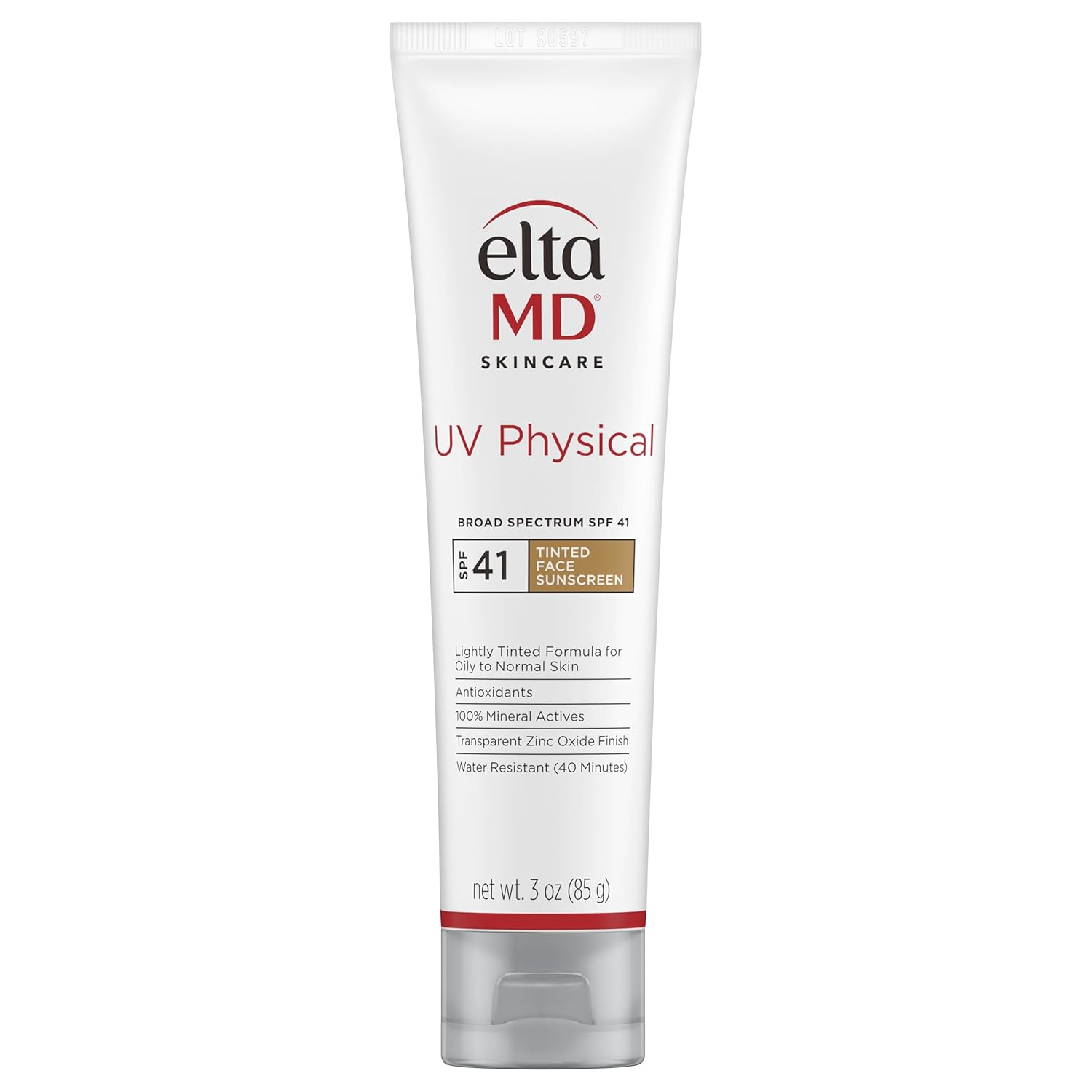
Is a physical sunscreen like EltaMD UV Physical actually worth it?
Worth it, with a shade caveat
Why physical sunscreen has a white cast reputation
Picture the sting: sweat rolls into the corner of your eye after a chemical sunscreen and it burns for ten straight minutes. Or the other failure mode, you rub in a mineral formula and walk out looking faintly gray, like you forgot to blend your foundation. That's the reputation physical sunscreen has carried for years, gentle on sensitive skin, rough on every mirror.
How EltaMD's transparent zinc oxide actually works
The mechanism is buried under the tint, so let's dig it out. A chemical sunscreen absorbs UV rays and converts them to heat, which is why it can sting on broken or reactive skin. A physical sunscreen like this one works differently: zinc oxide particles sit on top of the skin and reflect UV rays away before they ever get absorbed. That's the whole appeal for sensitive or oily skin, nothing has to soak in to do its job.
The old complaint about mineral formulas was the chalky white residue, which happened because early zinc oxide particles were too large and scattered visible light along with UV light. Milling that zinc down finer, and adding a light iron oxide tint matched to fair to medium tones, is how this one gets around it, the tint fills in exactly where the residual whiteness would show. The antioxidants layered in aren't doing the blocking, they're mopping up the stray free radicals that slip past any sunscreen over a day outside. And because the zinc forms a physical film rather than a chemical bond that breaks down, it holds through sweat and water for a stretch before it needs reapplying, which is where the water resistance actually comes from.
So the real choice was never sunscreen versus no sunscreen, it's reflected versus absorbed. You're not buying a stronger filter here, you're buying a shield that never has to enter your skin to do the job, and the tint is just the trick that makes the shield disappear.
Who this mineral sunscreen is for, and who should skip it
Worth it if
- you have oily or sensitive skin that reacts to chemical filters
- your skin tone is fair to medium and the tint will actually match
- you want a mineral sunscreen that doubles as light coverage
- you're outdoors enough to need water resistance without constant reapplying
Skip it if
- your skin tone is deeper than medium and the tint won't match
- you want a completely tint-free, invisible finish
- you need SPF higher than 40/41 for prolonged high-altitude exposure
If your skin tone runs deeper than medium, skip this one and look for a mineral formula with a wider shade range.
The physical sunscreen reviews verdict on EltaMD UV Physical
If you have oily, sensitive or reactive skin and want something that sits on the surface instead of sinking in, this is a quiet yes, it'll become the sunscreen you actually reach for. If your skin tone runs deeper than medium, this particular tint won't do you any favors, so match the shade before you match the SPF.
The actual gain here is not thinking about your face for the rest of the day, no stinging when you sweat, no gray film staring back at you. Day one looks like this: you tap it on after moisturizer, it settles into something close to your actual skin tone instead of sitting like a mask, and you forget it's there until water hits it and it just holds. With well over fifteen thousand ratings behind it, the pattern that keeps repeating is skin that tolerates it without breaking out and a tint that blends rather than sitting on top.
Amazon shoppers rate it 4.5 out of 5 across 15,179 ratings. That is their number, not ours.
Before you go
Does physical sunscreen work better?
No, just different: physical sunscreen reflects UV rays at the surface instead of absorbing them, which is why it tends to be gentler on sensitive or reactive skin than chemical filters.
Do dermatologists recommend physical or chemical sunscreen?
Many dermatologists lean toward mineral sunscreen for sensitive, acne-prone or post-procedure skin because zinc oxide sits on top of the skin rather than being absorbed, though either type works as long as it's broad spectrum and worn daily.
What is a good physical sunscreen?
A good one uses finely milled or tinted zinc oxide so it doesn't leave a heavy white cast, and is formulated to be non-comedogenic if you're prone to breakouts.
Is it better to use physical or chemical sunscreen?
Neither is universally better, physical suits sensitive or reactive skin since it doesn't need to be absorbed, while chemical formulas tend to feel lighter and blend in without needing a tint.
By the numbers
beauty products reviewedThis one is a yes with a condition attached.
other reviews field the same questionDo dermatologists recommend physical or chemical sunscreen?
comes up across our beauty coverage, not just here — one of the things worth settling before you choose.
Verdict datasetQuestion indexCC BY 4.0
Full spec sheet
| Product Dimensions | 1.4 x 2 x 7 inches; 3 ounces |
|---|
Keep comparing


More beauty reviews.