Are instrument cable reviews right about the Elebase 1/4 inch cable?
Worth it, with a caveat on bass rigs
Why your cable is the first thing to fail
Your amp barks out a burst of static right as the solo hits, and you shake the cable at the jack like that's ever fixed anything. It usually isn't the amp. It's the two feet of cheap cable between your guitar and everything else, doing exactly what cheap cable does: giving up at the connector before you're done with the song. Instrument cable reviews exist because that failure point is invisible until it isn't.
How an instrument cable actually protects your signal
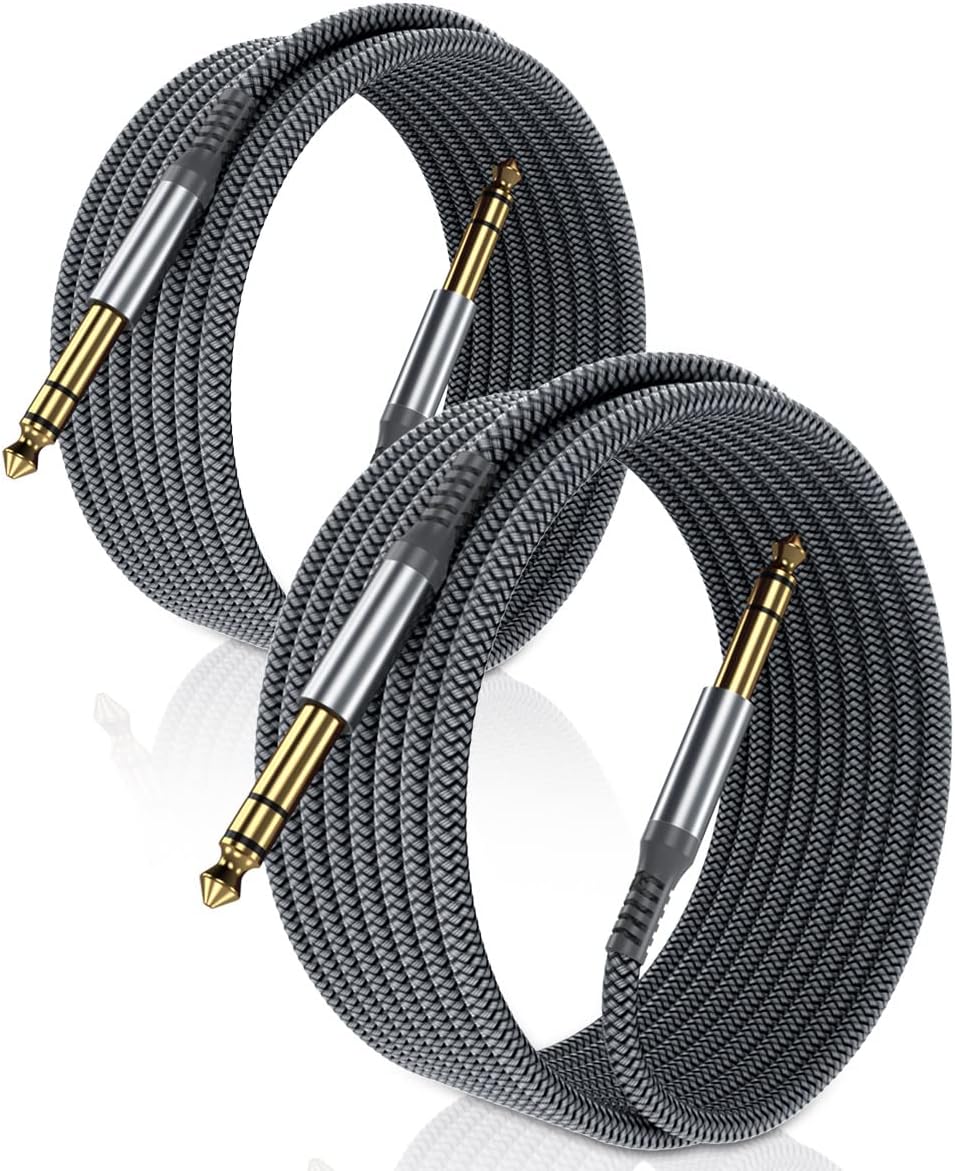
Here's where your money actually goes on a cable like this. Inside the jacket sits a copper conductor, wrapped in two layers of shielding instead of one. That extra layer is the whole point: it's a foil or braid that intercepts electromagnetic noise, the hum from fluorescent lights and other gear, before it can ride along with your signal into the amp. One layer catches most of it. Two layers catch more, which is why the buzz that plagues a bargain cable is quieter here, though not eliminated, since shielding fights probability, not physics with a guarantee. The connectors are the other half of the trade. Gold doesn't conduct better than the tin or nickel most cheap plugs use, but it corrodes slower, so the contact point stays clean for longer, which matters more than the metal itself. That's the actual argument for gold plating: not tone, maintenance. Then there's the part that fails first on any cable, the jack end, twisted and yanked and stepped on for years. The aluminum shell and braided nylon jacket exist purely to survive that abuse, not to improve the sound at all. The Velcro strap is there so the extra length of a 10 foot cable doesn't turn into a tripping hazard or a coiled mess by the amp. None of this changes what the cable sounds like, plugged into a functioning rig it's transparent, which is the entire job. What changes is how long it stays that way, and how quietly it does it. That's the trade you're actually making.
So the honest pitch here isn't better tone, cables don't have tone to sell, it's fewer trips to the store and less noise floor to fight. You're paying for a connector that survives the twist and a shield that quiets the room, not a magic upgrade to your sound.
Who the Elebase cable is for, and who should look elsewhere
Worth it if
- you're connecting a guitar or keyboard to an amp or mixer
- you want a cable that survives daily coiling and travel
- you'd rather spend once than replace a cable every year
Skip it if
- you're running bass through a rig sensitive to impedance mismatches
- you need a guaranteed silent connection for professional recording
- you already own a cable that works and aren't chasing an upgrade
Skip it if you're running a picky bass rig or need guaranteed silence on stage.
The Elebase instrument cable verdict
If you're plugging a guitar or keyboard into an amp and want the cable to just disappear into the background for a few years, this is a quiet yes at the price. If you're running a bass rig or a setup that's picky about impedance, check compatibility first, because that's where this cable's reputation gets shakier.
Picture the first gig with it: you coil it up after, nothing rattles loose, no crackle in the middle of a set. That's the whole ask. With close to eight thousand ratings behind it, the pattern that holds up is straightforward: buyers call it solid for the price and durable under regular use, though a chunk of the noise and bass compatibility complaints trace back to specific rigs rather than the cable itself. The itch to overspend on a cable rarely pays off; this covers the job.
Amazon shoppers rate it 4.5 out of 5 across 7,991 ratings. That is their number, not ours.
Before you go
Who makes the best instrument cable?
There's no single best, quality comes down to shielding layers and connector build, and brands from budget to premium can get both right for different prices.
What cable gives the best sound quality?
The best sound quality comes from a cable that adds nothing, meaning clean connectors and solid shielding that keep noise out rather than any cable adding tone of its own.
Do instrument cables make a difference?
Yes, but the difference shows up in noise rejection and how long the connection stays reliable, not in the tone itself, since a properly working cable is transparent.
Are boss instrument cables good?
Yes, Boss cables have a solid reputation for build and shielding, though they typically cost more than budget options like this one for a similar functional result.
By the numbers
earn an unconditional yes at full priceOut of 161 electronics products we have reviewed. This one is a yes with a condition attached.
Verdict datasetQuestion indexCC BY 4.0
Full spec sheet
| Connector Type | 6.35mm |
|---|---|
| Cable Type | TRS |
| Compatible Devices | Guitar AMP,Electric Guitar, Musical Instrument, Speaker, Amplifier |
| Other Special Features of the Product | 1/4 Inch TRS Guitar Cable |
| Compatible Phone Models | Guitar Bass AMP Cable/Electric Guitar and more |
| Connector Gender | Male-to-Male |
| Number of Pins | 3 |
| Connectivity Technology | 1/4 to 1/4 Inch |
Head to head
Keep comparing


More electronics reviews.