Speaker Cable vs Instrument Cable: What Are You Actually Wiring?

Amazon Basics 16-Gauge Speaker Wire Cable
Worth It (With a Caveat)
- you're wiring a standard stereo or home theater setup at normal room lengths
- you want polarity marked wire so you're not guessing on installation
- you're comfortable stripping and twisting wire yourself
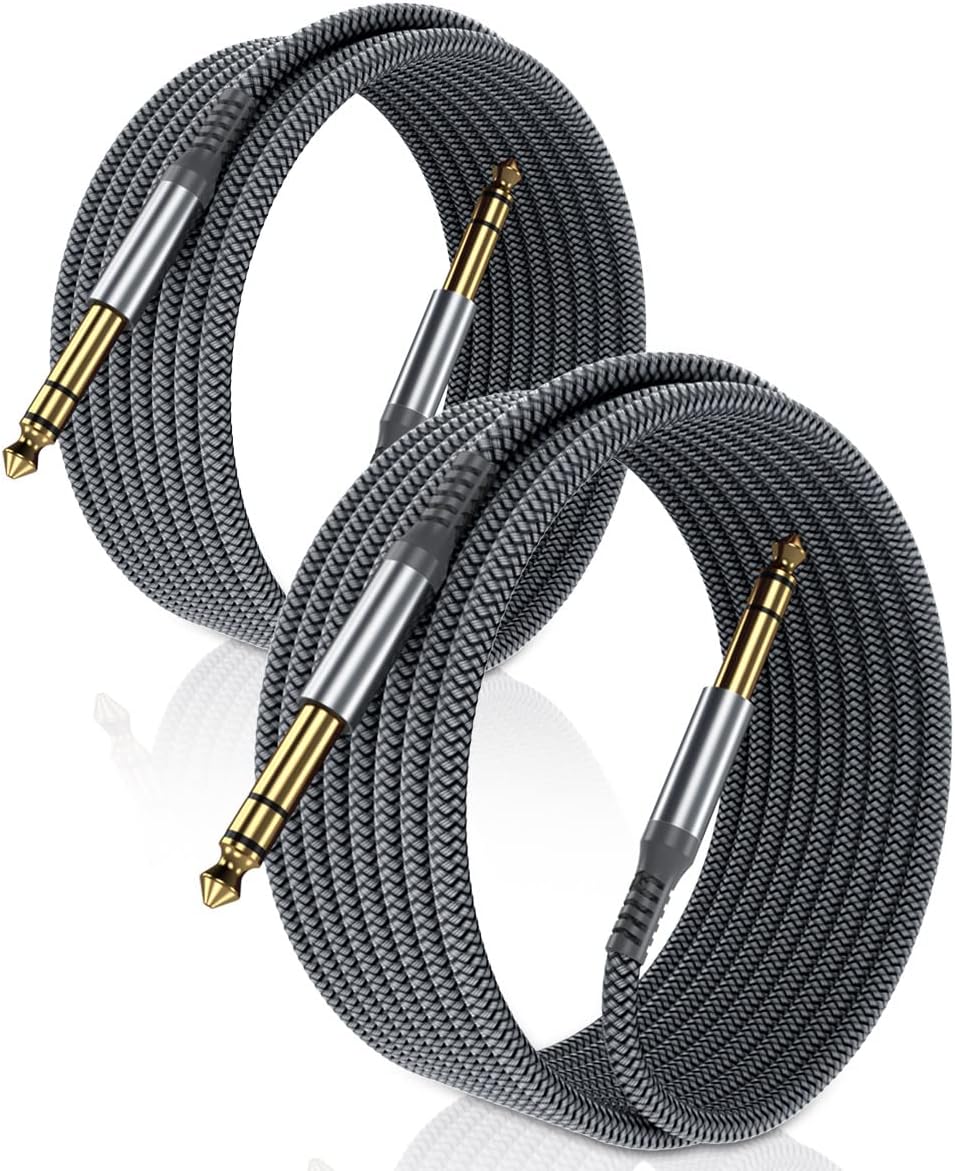
Elebase 1/4 Inch TRS Instrument Cable 10FT 2Pack
Worth it, with a caveat on bass rigs
- you're connecting a guitar or keyboard to an amp or mixer
- you want a cable that survives daily coiling and travel
- you'd rather spend once than replace a cable every year
By the numbers: both score 4/5 on our verdict scale — the split here is audience, not quality. Full dataset.
Speaker Cable vs Instrument Cable
Type speaker cable vs instrument cable into a search bar and you'll get two very different aisles pretending to be one question. One is about wiring your amp to your speakers. The other is about plugging a guitar or keyboard into that amp in the first place. They look similar enough on a spool that people grab the wrong one, then wonder why their rig hums or their home theater sounds thin. The fix isn't a better cable. It's knowing which job you're actually paying for.
Speaker cable's only job is to move an already amplified signal from your amp to a passive speaker. That signal is loud and low impedance, so the cable doesn't need shielding, it needs enough copper. Gauge and conductor quality matter because resistance adds up over distance, and past a certain run length or with power hungry towers, thin wire starts eating your signal as heat. That's the whole spec sheet.
Instrument cable does the opposite job. It carries a tiny, high impedance signal from a guitar, bass, or keyboard into an amp or mixer input, before anything gets amplified. That signal is weak enough to pick up hum and interference from every dimmer switch and power supply nearby, so the cable needs a shield, not extra copper. The connector matters too, because a 1/4 inch jack that loosens or a solder joint that fails mid coil is where these cables actually die.
Swap them and you feel it immediately. Run instrument cable to your speakers over any real distance and you lose output. Run speaker wire into your guitar and you'll hear every fluorescent light in the room. Same category on a store shelf, completely different circuit.
Choose the speaker cable if
- You're wiring a standard stereo or home theater setup at normal room lengths
- You want polarity marked wire so you're not guessing on installation
- You're comfortable stripping and twisting wire yourself
Choose the instrument cable if
- You're connecting a guitar or keyboard to an amp or mixer
- You want a cable that survives daily coiling and travel
- You'd rather spend once than replace a cable every year
These aren't competing for the same job, so the real answer is simpler than it looks. If you're connecting an amp to passive speakers, buy speaker cable, and buy enough gauge for the run, not less. If you're plugging an instrument into an amp or mixer, buy instrument cable, and check it against a bass rig if that's what you're running, since that's where the reviewed cable's caveat shows up. Both verdicts here are a qualified yes at their price. Neither one covers the other's job, no matter how similar the spool looks.
Before you go
Can I use instrument cable to wire my speakers?
Not for any real distance. It lacks the gauge to carry a speaker level signal without losing output, and that loss gets worse the longer the run.
Can I use speaker wire for my guitar or keyboard instead?
No. Speaker wire isn't shielded, so it will pick up hum and interference that an instrument cable is built to block.
Does gauge matter for instrument cable the way it does for speaker cable?
Not in the same way. Instrument cable quality comes down to shielding and connector durability, not copper thickness.
Full verdicts: Amazon Basics 16-Gauge Speaker Wire Cable · Elebase 1/4 Inch TRS Instrument Cable 10FT 2Pack