Are DuraGo Rotors Any Good?
Worth it, with a clear limit on what it's built for
Why that rust ring on your old rotor keeps coming back
You crack the lug nuts, pull the caliper, and there it is: a rust ring baked into the hat of the old rotor and a brake pedal that's been pulsing for two weeks straight. You already know the rotor's shot. What you don't know yet is whether a DuraGo rotor, priced well under a dealer part, is actually built to survive the next few winters or just looks the part in the listing photo. That's the real question behind durago rotors any good, and it gets answered on the garage floor, not in the marketing copy.
How DuraGo's vented rotor and coating actually work
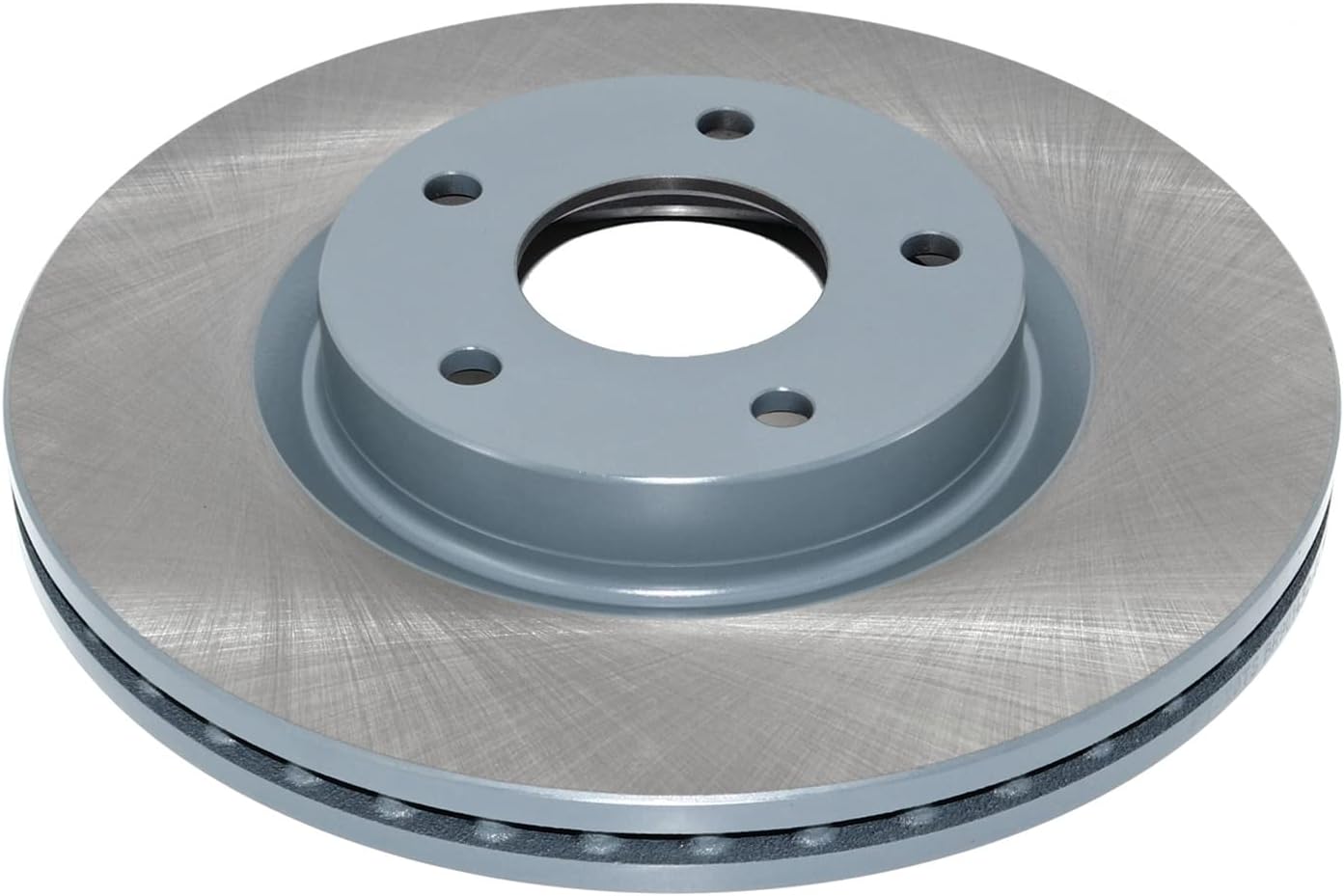
Start with the vanes. This is a vented rotor, meaning there are internal channels between the two braking faces, shaped to pull cool air in at the center and force hot air out at the edge as the rotor spins. That matters because heat is what kills brakes: a rotor that can't shed heat fast enough warps, and a warped rotor is the pedal pulse you just felt. Next is the finish. DuraGo skips the directional swirl pattern some rotors ship with and uses a non-directional finish instead, which means the surface is ready to bed pads against right out of the box, no extra machining before you bolt it on. That saves you a step in the install and gets the pads seated properly the first time you brake hard, instead of glazing from an uneven surface. Then there's the titanium gray coating, and here's the part worth being precise about: it's sprayed on the hat and the outer edge, the parts that rust and stare back at you through your wheel spokes, not on the friction surface where the pad actually bites. That surface gets machined clean regardless of finish. So the coating's job isn't stopping power, it's corrosion protection for the metal that isn't doing the braking. Underneath all of it is a cast iron core, and DuraGo's claim is tighter tolerances and cleaner castings than a base-line part, which in practice means more consistent airflow through those vanes and fewer weak spots that crack under repeated heat cycles.
So here's the trade you're actually making. You're not buying a titanium rotor, titanium doesn't show up anywhere in the metal, you're buying a coated cast iron rotor with a vented core and a finish that saves you a bedding step. That's a legitimate mid-tier rotor built to resist rust where you can see it and cool properly where it matters. Whether that's worth it over a bare rotor comes down to how much you care about that rust ring showing through your wheels.
Who the DuraGo Titanium Series rotor is for, and who should skip it
Worth it if
- you're replacing a warped or rusted rotor on a daily driver
- you want rust resistance on the hat and edge without dealer pricing
- you're doing your own front brake job and want a rotor ready to bed pads without extra machining
- your wheel design shows the rotor hat and you'd rather it not rust visibly
Skip it if
- you tow or haul heavy loads regularly
- you track the car or drive aggressively on a regular basis
- your car specs a particular OE or performance rotor for its trim
Not for towing, track days, or trims that spec a particular OE rotor.
The DuraGo rotors verdict: are they worth it
If you're swapping worn rotors on a daily driver and want something that resists rust on the hat without a rebuild-shop price tag, this is a quiet yes. If you're towing regularly, tracking the car, or running a trim that specs a particular OE rotor, skip it and put the money toward a rotor built for that load instead.
That rust ring you keep seeing through the wheel is the thing this actually removes, and the pulsing pedal goes with it once the new rotor is torqued down and the pads bed in over the first few stops. Day one looks like a smooth pedal, no shudder at highway speed, and a hat that still looks clean the next time you're under the car for an oil change. It's not going to turn a commuter car into a track car, and it isn't supposed to.
Amazon shoppers rate it 4.5 out of 5 across 48 ratings. That is their number, not ours.
Before you go
How long do DuraGo rotors last?
No fixed mileage guarantee. Rotor life depends more on driving and pads than brand, but the vented design and tight-tolerance casting handle normal street heat cycles without early warping.
Who makes DuraGo brake rotors?
DuraGo is the brand name, engineered and machined to their own specs rather than rebadged OE.
What is the difference between DuraGo rotors and Raybestos rotors?
Both are aftermarket brands but not directly comparable. Raybestos spans economy to premium; this DuraGo is coated mid-tier, not baseline.
Are DuraGo car parts good?
Yes, for standard brake jobs on daily drivers. Vented cooling and rust-resistant coating cover basics well, but it's built for street use, not performance or heavy-duty work.
By the numbers
earn an unconditional yes at full priceOut of 137 automotive products we have reviewed. This one is a yes with a condition attached.
other reviews field the same questionHow long do DuraGo rotors last?
comes up across our automotive coverage, not just here — one of the things worth settling before you choose.
Verdict datasetQuestion indexCC BY 4.0
Full spec sheet
| Brand Name | DuraGo |
|---|---|
| Manufacturer Part Number | BR90143201 |
| Number of Items | 1 |
| Included Components | Brake Rotor |
| Item Type Name | Brake Rotor |
| Item Weight | 2 pounds |
| Model Number | BR90143201 |
| Unit Count | 1 Count |
Keep comparing



More automotive reviews.