Are Vortex Optics binoculars actually worth buying?
Worth it if you're outdoors often enough to notice the glass
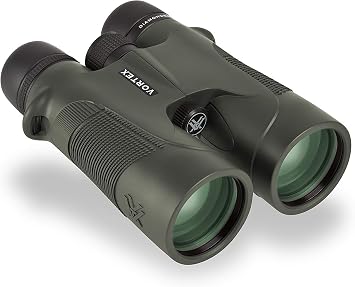
Why cheap binoculars fog up and let you down
You crouch, raise a cheap pair of binoculars to your eyes, and the deer or the hawk you spotted has already dissolved into a smear of glare. Fog on the inside of the lens, in July, is the giveaway that you bought glass, not an instrument. That's the gap Vortex Optics binoculars are built to close, and the Diamondback 10x42 is the model that gets asked about most.
How the Vortex Diamondback 10x42 actually works
Here's where your money actually goes. A roof prism binocular folds the light path back on itself inside a straight barrel, instead of the zigzag a porro prism uses, which is why the Diamondback looks slim and holds together instead of hinging apart at the middle. That straight-line design is also why roof prisms are easier to seal: Vortex fills the housing with nitrogen and gaskets the seams, so temperature swings push moisture out instead of trapping it inside as fog. That single spec, fog proof, is the difference between glass that survives a dawn hunt at 40 degrees and glass that quits on you exactly when the light gets interesting. The other number worth knowing is the exit pupil, math the spec sheet never spells out: divide the 42mm objective by the 10x magnification and you get 4.2mm, the width of the beam of light actually reaching your eye. That's respectable for daylight and fine at dusk, though an 8x42 would hand you a slightly wider 5.25mm beam and a steadier view for the same weight, because the extra magnification on the Diamondback also shrinks your field of view and amplifies hand shake. Ten power gets you closer to something far away; it also means your arms have more work to do holding the image still. That's the honest trade every 10x42 makes, and it's a design decision, not a defect.
So you're not buying magnification, you're buying a sealed, purged optical system that won't fog on the one morning you needed it not to. The number on the box is marketing; the nitrogen and the o-rings are the actual product.
Who the Vortex Diamondback binoculars are for
Worth it if
- you're outside enough that fogged or hazy glass would actually bother you
- you want a sealed, nitrogen purged binocular that survives weather swings
- you need reach for hunting or long range birdwatching
- you're comparing against pricier Vortex glass and want most of the durability for less money
Skip it if
- you only need binoculars for one event a year like a concert or game
- you want the widest possible field of view or the brightest low light image, which favors an 8x42
- you're on a tight budget and don't care about fog proofing
Not for the once-a-year concert or ballgame crowd, and not for anyone chasing the widest low-light view an 8x42 gives you instead.
The Vortex Diamondback binoculars verdict
If you're out with these often enough that fogged or hazy glass would actually bother you, the Diamondback is a quiet yes at this price. If you're buying binoculars for one music festival or a single hike a year, a cheaper fixed-focus pair does the same job for less money and less guilt.
Picture the next early start: you step out before sunrise, raise the Diamondback, and the view is just there, sharp, no fog, no adjusting for the cold. That's the entire promise of this category, delivered without drama. With more than a thousand ratings behind it, the recurring theme among owners is exactly that: the glass stays clear and bright in low light, which is the one thing a cheap pair almost never manages.
Amazon shoppers rate it 4 out of 5 across 1,192 ratings. That is their number, not ours.
Before you go
Are vortex optics binoculars good?
Yes, within their price bracket: the Diamondback line uses sealed, nitrogen purged roof prisms that hold up to weather and daily handling better than most binoculars at this price point.
What are the best vortex binoculars for the money?
For most buyers the Diamondback 10x42 is the value pick, sitting below the pricier Viper HD line while still using the same fog proof, waterproof construction.
Which is better, 12x50 or 10x42 binoculars?
A 10x42 is lighter, steadier in your hands, and has a brighter exit pupil per gram than a 12x50, which trades all of that for extra reach you'll mostly notice at long range.
Which is better, Bushnell or Vortex binoculars?
At comparable price points the two brands trade blows on optics, but Vortex generally has the edge in fit and finish and a more consistent build across its lineup.
By the numbers
camera & photo products reviewedThis one is a yes with a condition attached.
other reviews field the same questionAre vortex optics binoculars good?
comes up across our camera & photo coverage, not just here — one of the things worth settling before you choose.
Verdict datasetQuestion indexCC BY 4.0
Full spec sheet
| Brand | Vortex |
|---|---|
| Age Range (Description) | Adult |
| Special Feature | Fog Proof |
| Objective Lens Diameter | 42 |
| Magnification Maximum | 10 |
Keep comparing


More camera & photo reviews.