Is an Air Purifier Worth It for Your Home?
Worth it if
Worth it if you've got pet hair, allergies, smoke, or cooking odors you can actually notice in a room you'll size the unit to correctly, and you're willing to keep filters on a replacement schedule.
Skip it if
your room is already small and well ventilated, or if you're hoping one compact unit will clean a whole open-plan floor. It won't.
Related product reviews to help you decide
$36–$230 across these picks, at time of writing
 Levoit Air Purifier for HomeWorth it, if you match it to your room sizeRead the review
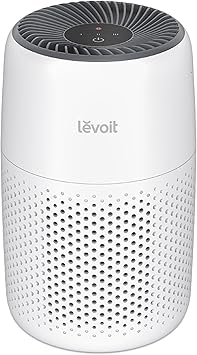 Levoit Air Purifier ReviewWorth it, if you keep your expectations sized to the roomRead the review
 Is the AROEVE Air Purifier Worth It? An Honest ReviewWorth it, if your room fits the coverageRead the review
 Coway Air Purifier ReviewWorth it, for the right roomRead the review
Is an air purifier worth it once you understand what it's actually doing to the air?
Is an air purifier worth it, or is it just a fan with a filter taped to the front? Mechanically it's closer to the second description than the marketing wants you to think, and that's exactly why sizing matters more than any feature list. A purifier pulls room air through a filter stack, traps particles, and pushes clean air back out. Run that cycle enough times per hour and the particle count in the room drops. Run it too few times, because the room's too big for the motor, and you get a very expensive white noise machine.
That "enough times" number is the part the glossy photos skip. A unit rated to refresh a 222 square foot room close to five times an hour is doing real work in a bedroom. Put the same unit in a 1,000 square foot open-plan living space and it might only cycle that air once an hour, which is closer to background hum than actual cleaning. This is why the reviews in this category keep circling back to room size before anything else, and it's why a bedroom-sized purifier and a living-room-sized one aren't interchangeable just because they look similar on a shelf.
The other piece worth watching is the filter itself, not the unit. HEPA-grade filtration catching fine particles down to a fraction of a micron is the mechanism doing the allergy and pet-dander work, and that filter degrades. A purifier with a clean filter and a purifier with a filter that's overdue for a swap are functionally two different machines, even though the housing looks identical. That's the ongoing cost the box doesn't spell out.
What changes about your day, if the sizing is right, is subtle rather than dramatic: less dust settling on surfaces, less of that stale-room smell after cooking, and for allergy sufferers, fewer symptoms triggered by whatever's floating in that specific room's air.</mechanism> <parameter name="who_for">["You have pets, allergies, smoke, or cooking odors you notice in the air","You're purifying one specific room, not trying to cover an open floor plan","You want it running quietly overnight rather than as background noise","You're comfortable budgeting for periodic filter replacements","You'd rather see or sense a real air quality change than just hear a fan hum"]
It earns its place for
- You have pets, allergies, smoke, or cooking odors you notice in the air
- You're purifying one specific room, not trying to cover an open floor plan
- You want it running quietly overnight rather than as background noise
- You're comfortable budgeting for periodic filter replacements
- You'd rather see or sense a real air quality change than just hear a fan hum
Save your money if
- Your room is small and already well ventilated
- You're hoping one unit covers a large open-plan living space
- You want something completely silent and totally hands-off with no filter upkeep
Think of it less as a one-time purchase and more as cost-per-filter-swap: a unit sized right for the room needs a filter change every few months, and that ongoing cost is part of what you're actually signing up for, not the machine alone.
Before you decide
Is there a downside to using an air purifier?
Yes, ongoing filter costs and the noise at full fan speed are the two real downsides, plus a unit sized wrong for the room does very little cleaning at all.
Do home air purifiers really make a difference?
Yes, if the unit is sized to the room. Undersized for the space, and the air simply isn't cycling through the filter often enough to matter.
What are signs you need an air purifier?
Noticeable pet dander, dust settling fast, seasonal allergy symptoms indoors, lingering cooking smells, or smoke drifting in from outside are the usual triggers.
How many hours a day should you run an air purifier in your house?
Most owners run it continuously, often overnight on a low or sleep setting, since particle levels build back up whenever the unit is off.
An air purifier is worth it when you match the unit's coverage to the actual room and you've got a real reason, pets, allergies, smoke, cooking smells, driving the purchase. It's not worth it as a one-size-fits-all fix for a whole floor, and it's not free to run once you factor in filters. Size it honestly, budget for upkeep, and it does what it claims. Skip the mismatch and skip the maintenance-free myth.
Every home & garden product we have reviewed: home & garden reviews.