Are self-tapping screws like these actually worth it?
Worth it, with a torque limit
Why a self-tapping screw won't bite the first time
You've got a sheet metal bracket, a driver in your hand, and a screw that won't bite. It walks sideways, chews a ragged hole, and you're left holding a stripped fastener with nothing to show for it. That's the exact problem self-tapping screws exist to solve, and it's why anyone reading self tapping reviews before they buy wants one answer: will this batch actually drill and grab on the first pass, or wander off like the last cheap bag from the rack.
How a self-drilling screw actually cuts its own hole
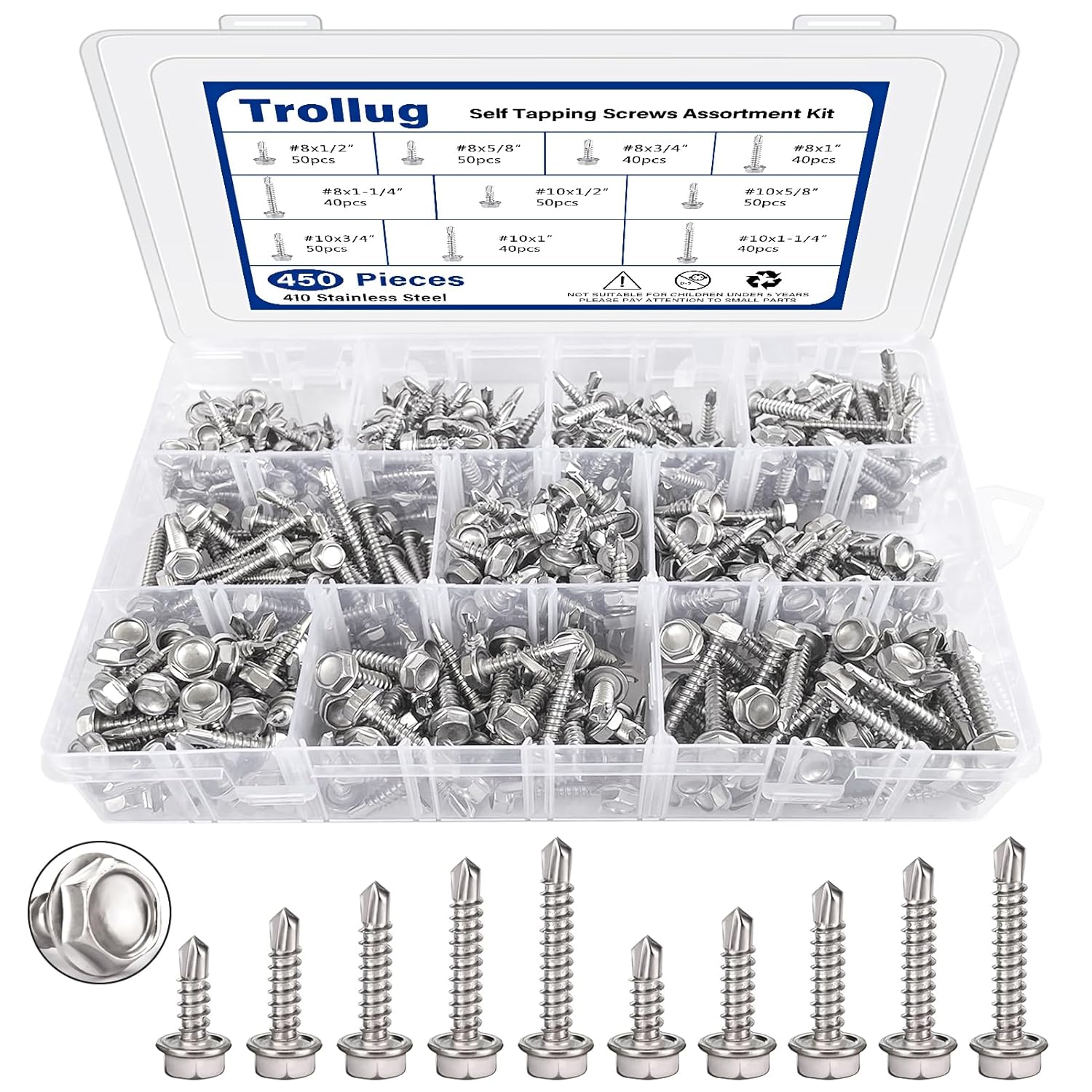
Here's what's actually happening at the tip. A self-drilling screw carries a small fluted point shaped like a drill bit, so instead of you predrilling a pilot hole, the screw does that job itself: it cuts through sheet metal, then the threads immediately behind the point bite and pull it home in the same motion. That's the entire trick, and the tip geometry matters more than anything printed on the box. These are cut from 410 stainless, a harder, more corrosion-resistant alloy than the cheap zinc-plated stuff, and because of how that particular stainless is structured, it still holds a magnetic pull, so a stray screw sticks to your driver bit instead of rolling under the workbench. The threads come from high-precision cutting rather than a stamped die, which means less slipping and less stripping when you're driving into thin gauge metal where there's no margin for a sloppy bite. Thread coverage is partial, not full length, and that matters when you're joining two pieces: the unthreaded shank lets the top piece pull down tight against the piece underneath instead of both pieces binding and leaving a gap. The kit itself is sorted into ten compartments, #8 and #10 across five lengths from a half inch to an inch and a quarter, so the size you need for a given metal thickness is already waiting instead of you guessing at a hardware store bin.
You're not buying a bag of screws, you're buying a tip that starts its own hole and a size already matched to the job, so the real question isn't whether they're stainless, it's whether your project is thin sheet metal work or something heavier that wants a bigger fastener.
Who this screw assortment is for, and who should skip it
Worth it if
- you work with thin to medium gauge sheet metal
- you want an assortment of sizes on hand instead of single-size boxes
- you value a self-drilling tip that skips separate pilot holes
- you want screws that stay magnetic on the driver bit
Skip it if
- you're fastening thick structural steel
- you drive with an impact driver at full torque without a clutch
- you only need one screw size and don't want the rest of the assortment
Not for structural steel or full-torque impact driving, the shank is too thin for that kind of load.
The self-tapping screws verdict
If you're working sheet metal, HVAC ductwork, or furniture and cabinet repairs where the gauge is thin, this is a quiet yes, the assortment covers what you'll actually reach for. If you're fastening thick structural steel or leaning on an impact driver at full torque, skip it, these are thin-shank screws and that kind of load is exactly where they shear.
Picture the next time a hinge plate or duct strap needs a screw that actually finds its own hole, no predrilling, no trip back to the store for the one size you're missing. Grab the driver, pick the length that matches your metal thickness, and it's seated before you've had time to overthink it. Keep the torque setting sane and use a clutch, and this box quietly handles the next dozen small metal jobs around the shop without another thought.
Amazon shoppers rate it 4.6 out of 5 across 420 ratings. That is their number, not ours.
Before you go
Do self-tapping screws work on steel?
Yes for sheet steel and other thin gauge metal, since the drill-point tip cuts its own hole, but thick structural steel still needs a pre-drilled hole and a heavier fastener.
What's the difference between self-tapping and self-drilling screws?
A self-tapping screw cuts threads into a hole that already exists, while a self-drilling screw has a drill-point tip that bores the hole itself first, which is the style used here.
Are stainless steel self-tapping screws strong enough for heavy loads?
The 410 stainless resists rust well, but on small gauges like #8 and #10 the shank is thin, so it's not rated for structural or high-torque work.
By the numbers
earn an unconditional yes at full priceOut of 39 industrial & scientific products we have reviewed. This one is a yes with a condition attached.
Verdict datasetQuestion indexCC BY 4.0
Full spec sheet
| Item Dimensions | 7.7 x 5.3 x 1.4 inches |
|---|---|
| Thread Size | #8, #10 |
| Item Weight | 1.14 kg |
| Thread Coverage | Partially Threaded |
| Fastener Size | #8-32 x 1/2" to 1-1/4", #10-32 x 1/2" to 1-1/4" |
| Size Name | #8-32 x 1/2" to 1-1/4", #10-32 x 1/2" to 1-1/4" |
| Item Diameter | 0.08 inches |
| Number of Pieces | 450 |


