Is the Seed DS-01 probiotic actually worth it?
Worth it if you take gut health seriously and stick with it daily
Why probiotics never seem to actually help
You know that low-grade bloat that shows up by mid-afternoon, the one that makes your waistband feel like a decision you regret. You've probably tried a probiotic before, the kind from the pharmacy aisle that promises a lot and does very little you can feel. So when you're reading a seed probiotics review, the real question isn't whether it has bacteria in it, it's whether those bacteria ever actually make it to where they're supposed to work.
How the Seed DS-01 capsule-in-capsule delivery actually works
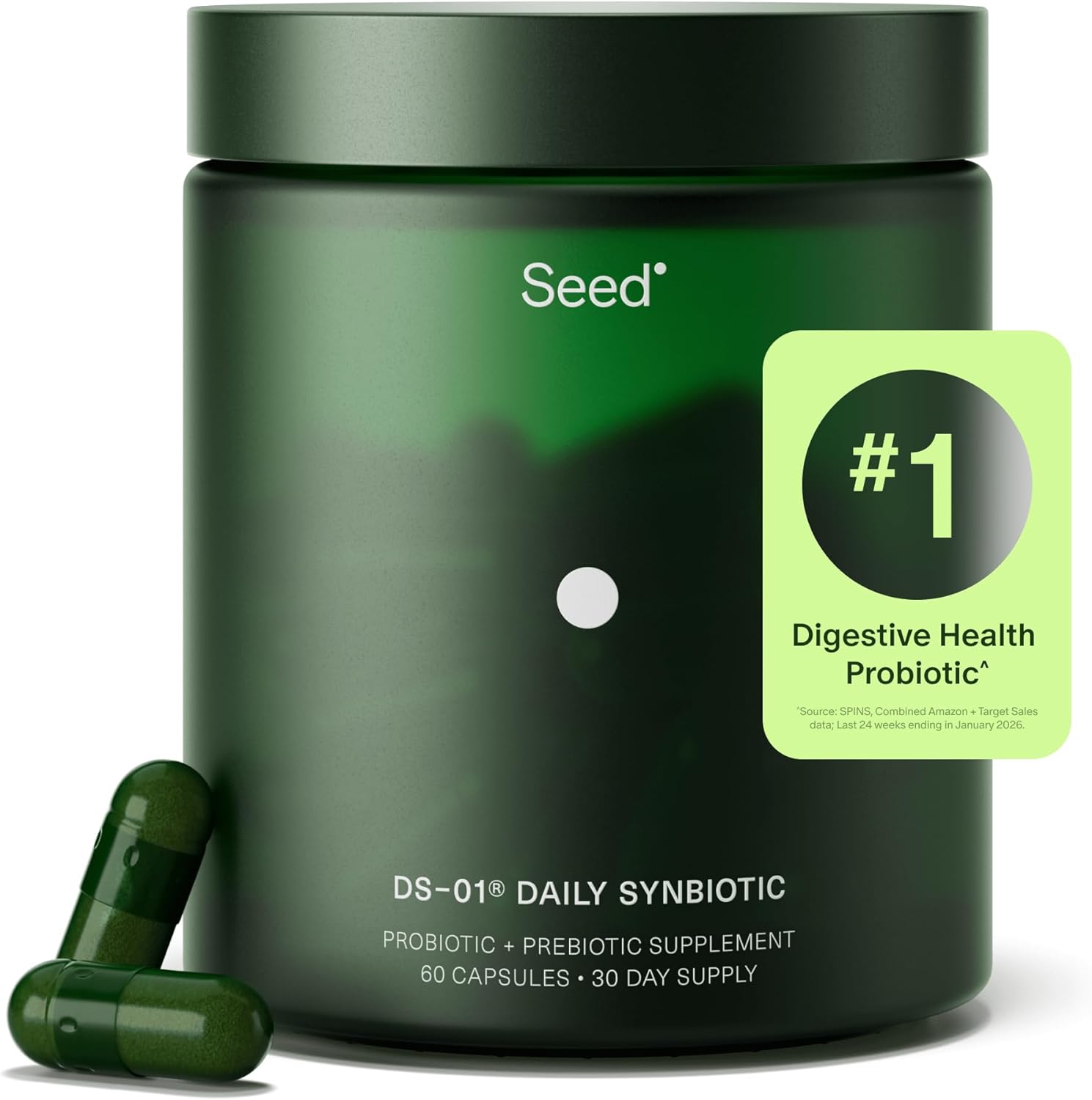
Here's the bit most probiotics quietly skip: your stomach acid is brutal, and most capsules dissolve long before the bacteria reach your gut alive. Seed's answer is a capsule inside a capsule. The outer shell is built to resist stomach acid entirely, so it doesn't break down until it hits the small intestine, which is exactly where the 24 probiotic strains and the prebiotic fiber need to land to do anything useful. That's the whole mechanism, really, delayed release timed to biology rather than to how fast a pill usually dissolves. The prebiotic half feeds the strains you already have, while the 53.6 billion AFU of live bacteria top up the ones that help with regularity, gas, and bloating. Practically, this means you're not just adding bacteria and hoping, you're aiming them at a specific address. It also means results build slowly, over weeks of daily capsules, not overnight. Two a day, ideally with the acclimation period if your gut is sensitive, and you fold it into your morning routine like a vitamin, not a fix.
So you're not really buying a probiotic, you're buying a delivery system, the capsule-in-capsule is doing more work than the bacteria count on the label ever could. A probiotic that dies in your stomach is just an expensive way to feel optimistic. The question worth asking isn't how many strains are in the jar, it's whether they're built to survive long enough to matter.
Who the Seed DS-01 synbiotic is for, and who should skip it
Worth it if
- You want a daily gut health habit you can stick with for months, not a quick fix
- You've tried other probiotics and felt nothing from them
- You care about the delivery mechanism, not just the strain count on the label
Skip it if
- You're looking for fast relief from a specific digestive issue right now
- You already take a prebiotic or fiber supplement and don't want to double up
- You're not going to take it consistently every day
Not for anyone wanting quick relief from an acute stomach issue rather than a long-term gut routine.
The Seed probiotics review verdict
If you've tried cheaper probiotics and felt nothing, and you're willing to commit to it daily for a few weeks, this is a quiet yes. If you're looking for a fast fix for an upset stomach or you're not going to take it consistently, save the money and talk to your doctor about what's actually going on.
Amazon shoppers rate it 4.4 out of 5 across 7,652 ratings. That is their number, not ours.
This is a product review, not medical advice. We research how products work and whether they earn their price; we don't test them clinically and nothing here is a treatment recommendation. For anything that affects your health, talk to a qualified professional first.
Before you go
What is the downside of Seed probiotics?
The main downside is the cost relative to drugstore probiotics, and the fact that any gut supplement takes weeks of consistent use before you notice a difference, not days.
What's better, AG1 or Seed?
They solve different problems: AG1 is a broad greens and vitamin blend, while Seed is specifically formulated as a targeted probiotic and prebiotic for gut regularity, so the better one depends on whether you want general nutrition support or gut-specific support.
By the numbers
health & personal care products reviewedThis one is a yes with a condition attached.
Verdict datasetQuestion indexCC BY 4.0
Full spec sheet
| Package Dimensions | 6.2 x 4.65 x 3.03 inches; 11.99 ounces |
|---|


