What do miter saw reviews really tell you about the Metabo HPT?
Worth it, if trim and flooring work is your regular job
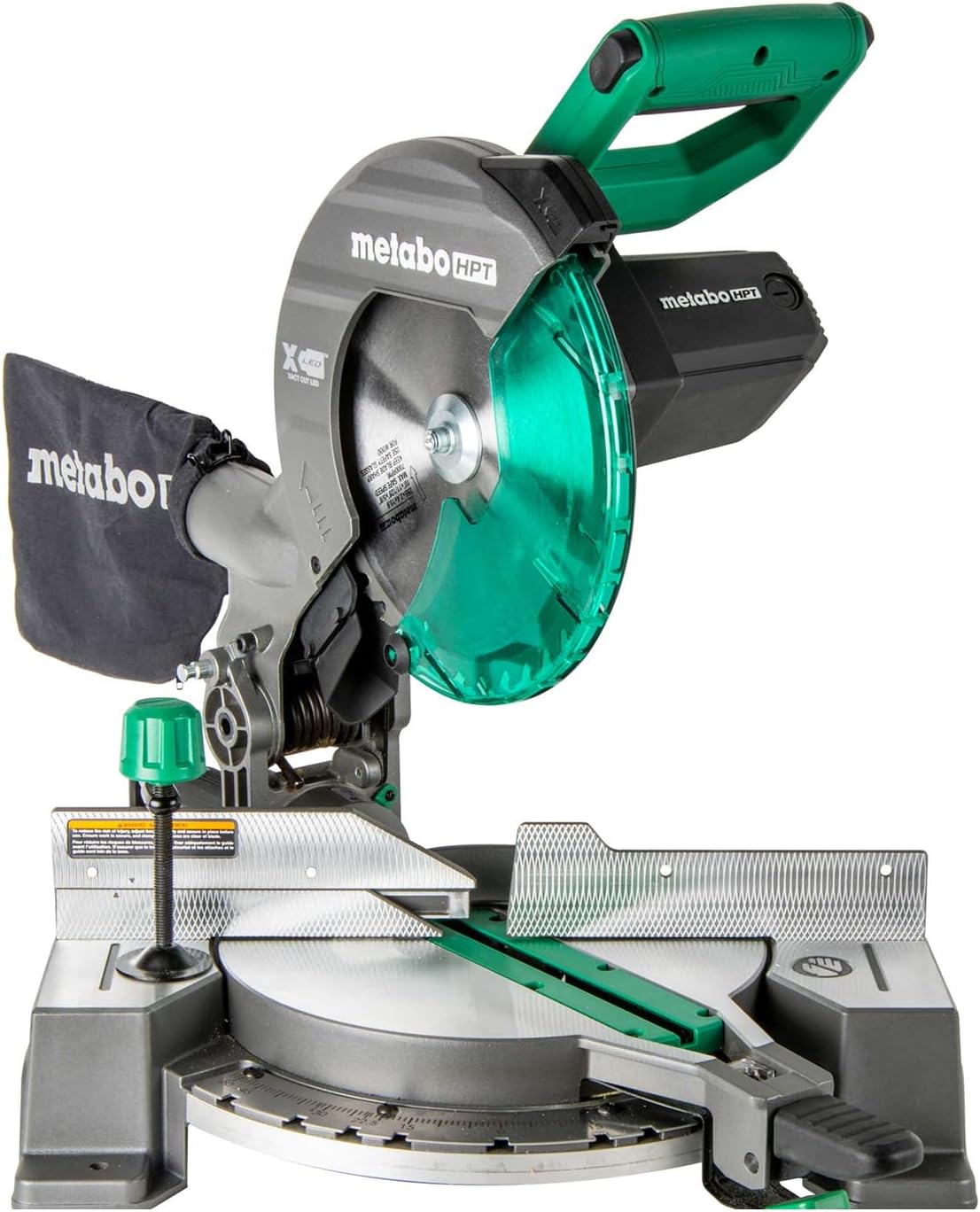
Why a miter cut still worries you before the blade drops
You're on your knees on the floor, tape measure in one hand, staring down a length of baseboard that has to land at exactly forty five degrees or the whole corner gaps. You've already scrolled through a stack of miter saw reviews trying to work out whether a cheaper blade drifts off true after the first hundred cuts. The saw in the box looks fine. Whether it still looks fine after a winter in the garage is the actual question.
How the Metabo HPT's shadow line actually keeps a cut on the line
Here's what's actually happening under the guard. The 40 tooth tungsten carbide blade spins at up to five thousand RPM off a 15 Amp motor, and more teeth means each one takes a thinner bite of wood, which is why trim and flooring stock comes off smooth instead of splintered. Swap in a framing blade with fewer teeth and you'd trade that finish for raw speed, but for baseboard and casing this tooth count is doing the finish work for you. The shadow line system is the part worth watching closely. There's no laser here, no battery to die at the worst moment. The blade housing is shaped so that when the blade spins, its own shadow falls across the wood exactly where the teeth are about to land. You nudge the board until that shadow sits on your pencil mark, and the cut lands there too. It's a mechanical trick, not an electronic one, so it never needs charging and never drifts out of calibration the way a cheap laser guide can. The vice clamp is the other half of accuracy. A single bevel saw only tilts one direction, so on trim that needs the mirror angle you flip the board instead of the saw, and the clamp is what keeps that flipped piece from creeping while the blade comes down. At twenty four pounds the whole thing carries out to a truck bed easily enough, though the handle itself is plastic, not metal, which is the part actually gripped and torqued on every single cut.
You're not buying a saw that cuts wood, any saw with a blade does that. You're buying a cut that lands on the line the first time, without a laser battery or a fudge factor to hide behind. Whether that repeatable accuracy is worth the money comes down to how many corners you're actually cutting.
Who this miter saw is really built for, and who should look elsewhere
Worth it if
- you cut trim, casing, or flooring often enough that a clean 45 degree joint matters
- you need a saw light enough to carry between rooms or job sites
- you're fine flipping stock for mirror angles instead of paying for dual bevel
Skip it if
- you need dual bevel cuts on crown moulding without flipping the board
- you're framing rough lumber daily where blade life outweighs trim finish
- you want a metal handle built for constant daily jobsite abuse
Skip it if you need dual bevel cuts on crown moulding without flipping stock, or if you're running rough framing lumber daily where blade life matters more than trim finish.
The Metabo HPT miter saw verdict, is it worth it
If you're doing trim, flooring, or casing work often enough that a clean forty five degree joint matters, this is a quiet yes. If you're framing rough lumber all day or need to bevel both directions without flipping stock, a dual bevel saw earns its extra cost instead. The plastic handle is the part to watch a year in, since it's the part doing all the work.
Picture the corner actually closing flush on the first try, no caulk smeared in to hide a gap. That's the day one payoff here, less fussing with shims and re-cuts, more baseboard actually going up on schedule. You still flip the board for the mirror angle, but once you know that going in, it stops being a surprise and just becomes the rhythm of the job.
Amazon shoppers rate it 4.7 out of 5 across 572 ratings. That is their number, not ours.
Before you go
What is the best mitre saw for home use?
For home trim and flooring work, a compact single bevel saw like this one is usually enough, since most home projects don't need the dual bevel range a full jobsite crew would want.
Which mitre saw is considered the best quality?
Quality shows up in the blade material and the clamping system more than the brand name, tungsten carbide teeth and a solid vice clamp are what actually hold a cut true over years of use.
Should I get a 7 1/4 or 10 inch miter saw?
A 10 inch blade like this one handles wider trim and baseboard in a single pass, while a 7 1/4 inch saw is lighter but limited to narrower stock.
Which miter saw is best rated in 2026?
Ratings shift by category, but a 10 inch single bevel saw in this price range consistently rates well for trim and flooring work specifically, not for heavy daily framing.
By the numbers
earn an unconditional yes at full priceOut of 159 home & garden products we have reviewed. This one is a yes with a condition attached.
Verdict datasetQuestion indexCC BY 4.0
Full spec sheet
| Power Source | Corded Electric |
|---|---|
| Other Special Features of the Product | Lightweight |
| Voltage | 120 volts |
| Number of Teeth | 40 |
| Cutting Angle | 52 degrees |
| Wattage | 1950 watts |
| Blade Shape | Round |
| Surface Recommendation | Wood |
Keep comparing


More home & garden reviews.