Does biotin actually work for hair, skin, and nails?
Worth it, if you're actually running short
Why you can't tell if biotin is actually working
You're at the bathroom mirror, turning over a nail that split again last week, staring at the biotin bottle on the shelf and wondering if it's doing anything at all or just sitting there as an expensive placebo. That's the real question under does biotin actually work: not whether the vitamin exists, but whether your body was ever short on it to begin with. You've taken it for a few weeks already, checked your hairbrush for signs, and found nothing you could swear to.
How biotin actually works for hair, skin, and nails
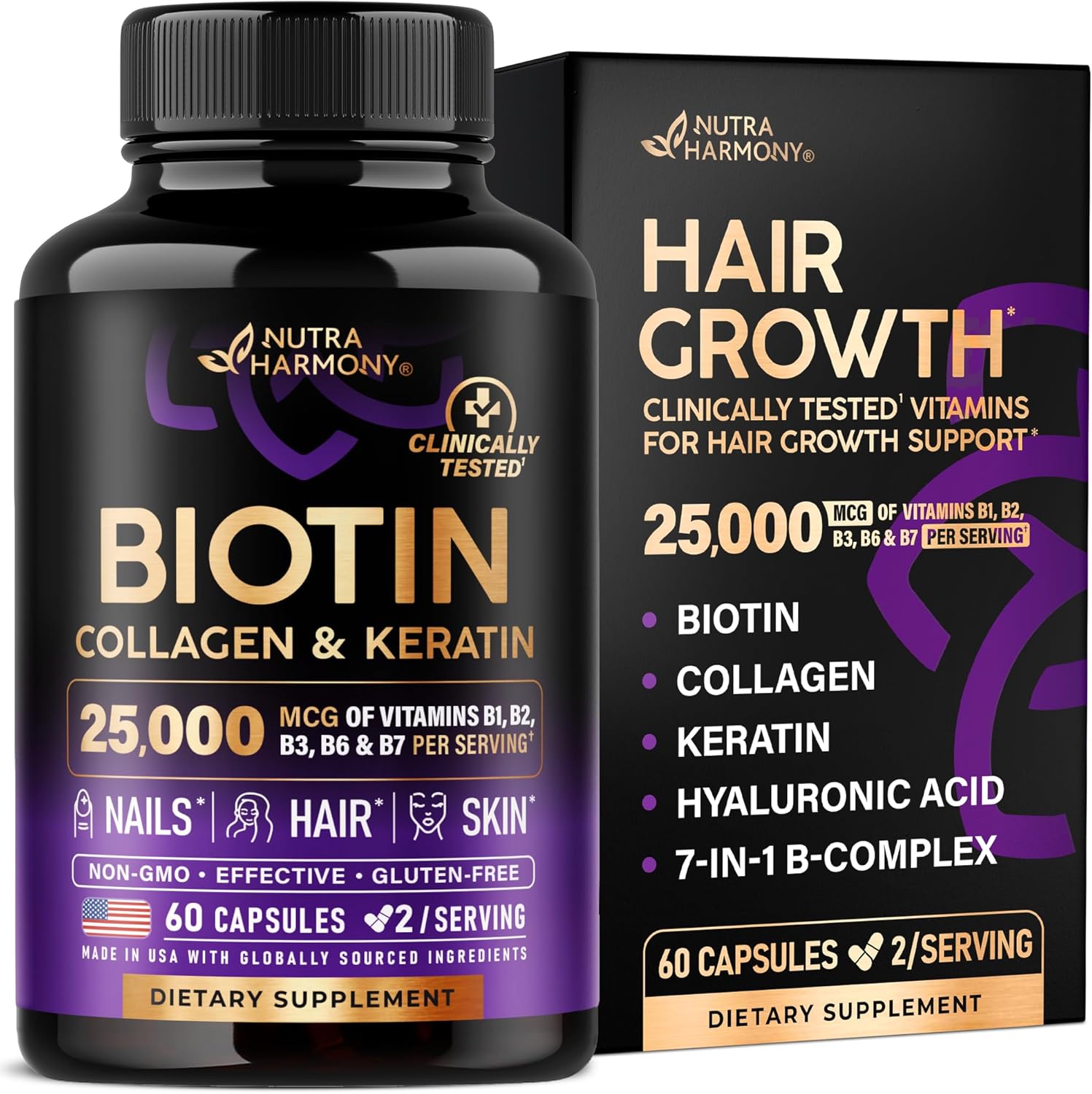
Here's what it does versus what you're hoping it does. Biotin isn't magic, it's a B vitamin that acts as a cofactor for the enzymes your body uses to build keratin, the actual structural protein that makes up hair strands and nail plates. Collagen and hyaluronic acid work a different angle, supplying amino acids and a water-holding molecule that keep skin hydrated and elastic. Put together in one capsule, that's a nutrient top-up, not a growth hormone. The body part of this is simple: nails grow faster than hair, and they have less structural padding to disguise a shortfall. So if a keratin-support supplement is going to show you anything honest, nails usually report first, less peeling and splitting, before hair shows anything at the root. Hair follicles work on a cycle measured in months, which is why a 90-day timeline isn't a stalling tactic, it's just how a strand actually gets built, from root to visible length. The catch worth knowing: most people eating a normal, varied diet aren't short on biotin at all, real deficiency is uncommon outside restrictive diets, certain medications, or pregnancy. That's not an argument against taking it, it's the reason results split so cleanly between people. If you were already running low, this closes a real gap. If you weren't, you're mostly paying for reassurance.
So the honest reframe is this: you're not buying a hair growth pill, you're buying a nutrient top-up for a gap that either exists in your body or doesn't. If it exists, the effect is real and traceable back to keratin production. If it doesn't, no amount of biotin adds more raw material than you already had.
Who this biotin and collagen blend is for, and who should skip it
Worth it if
- your diet runs light on protein or B vitamins
- you're postpartum or recovering from restrictive eating
- you can commit to a full 90-day course before judging results
- you want nail strength as your first honest signal
Skip it if
- your hair and nails are already healthy and unchanged
- you're expecting visible results inside a few weeks
- you have a sensitive stomach and are wary of supplement side effects
- you're already covering these nutrients through diet
Not for anyone expecting visible change inside a couple of weeks, or whose diet already covers these nutrients.
Is biotin actually worth it: the verdict
If you know your diet runs light on protein or B vitamins, or you're postpartum, or restrictive eating has been part of your year, this is a quiet yes worth three months of patience. If your nails and hair are already behaving fine and you're hoping for change beyond your own baseline, save the money for something your body actually lacks. Watch your nails first, they'll tell you faster and more honestly than your hairbrush.
The problem this quietly removes is the guessing, not knowing whether your nails and hair are being shortchanged on something basic. Day one looks unglamorous: two capsules with breakfast, nothing dramatic, just a small vote of confidence that you're covering a gap instead of wondering about it. A very large number of people who've taken this consistently describe nails that stop splitting and hair that reads thicker and shinier by the second bottle, which tracks with what the biology predicts for anyone who was actually running short. Give it the full ninety days before you decide anything.
Amazon shoppers rate it 4.5 out of 5 across 18,963 ratings. That is their number, not ours.
This is a product review, not medical advice. We research how products work and whether they earn their price; we don't test them clinically and nothing here is a treatment recommendation. For anything that affects your health, talk to a qualified professional first.
Before you go
Does my biotin really work for hair growth?
Yes, if your body was short on biotin. It's a cofactor for keratin, the protein hair is made of, but won't add growth beyond what a well-nourished body produces.
Is biotin actually worth it?
Yes, for people with nutritional gaps, restrictive diets, pregnancy, or certain medications. For others it's a low-risk top-up rather than guaranteed change.
Why shouldn't you take biotin every day?
High daily doses can interfere with thyroid and cardiac lab test markers, so mention it to your doctor before routine bloodwork.
Can biotin trigger acne breakouts?
Some people report breakouts on high-dose biotin, possibly linked to its effect on vitamin B5 absorption, though evidence is more anecdotal than settled.
By the numbers
health & personal care products reviewedThis one is a yes with a condition attached.
other reviews field the same questionDoes my biotin really work for hair growth?
comes up across our health & personal care coverage, not just here — one of the things worth settling before you choose.
Verdict datasetQuestion indexCC BY 4.0
Full spec sheet
| Package Dimensions | 4.57 x 2.44 x 2.17 inches; 2.4 ounces |
|---|---|
| Brand Name | NUTRAHARMONY |
| Primary Supplement Type | B Vitamins, Biotin, Collagen, Hyaluronic Acid, Keratin |
| Item Form | Capsule |
| Diet Type | Gluten Free |
| Product Benefits | Nails, Hair & Skin Health Support |
| Age Range Description | Adult |
| Container Type | Bottle |


