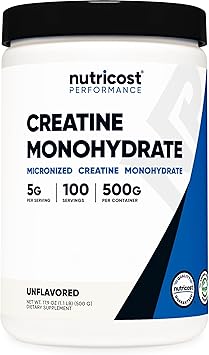
Is beta alanine actually worth taking before a workout?
Worth it, if you give it the weeks it needs

Why that tingling makes you wonder if beta alanine is working
Picture the twentieth rep of a hard set, or the last stretch of a long run, when your skin starts to prickle like pins and needles are crawling up your neck and forearms. It's an odd, slightly alarming feeling, and if you've gone looking through beta alanine reviews wondering whether that tingle means it's working or means something's wrong, you're asking the right first question. The doubt isn't really about the tingling. It's about whether any of this is doing something, or whether you're just buying an itch in a bottle.
How beta alanine actually delays the burn in your muscles
Beta-alanine is an amino acid, and on its own it doesn't do much. What matters is what your muscles do with it: they combine it with another amino acid, histidine, to build carnosine, and carnosine's job is to soak up hydrogen ions that pile up in muscle during hard, sustained effort. That acid buildup is a big part of why muscles start to burn and fail on a long set or a hard cardio push, so more carnosine in the tissue means you can push a little longer before that burn shuts you down. That's also why this isn't a stimulant, and why it doesn't behave like one. Caffeine hits your bloodstream and you feel it in twenty minutes. Carnosine has to accumulate in muscle tissue, scoop by scoop, over several weeks of consistent daily use, before the buffering effect is meaningfully higher than baseline. Judged against today's workout, it does close to nothing; judged against a training block, it's quietly working the whole time. The tingling, called paresthesia, is a separate and harmless side effect: beta-alanine interacts with skin nerve receptors at higher single doses, and it fades as your body adjusts or if you split a scoop across the day instead of taking it all at once. Because this is a pure, unflavored powder rather than a full pre-workout blend, it also means you're free to dose it into your own coffee, water, or existing pre-workout without paying for ingredients you don't need.
You're not buying a jolt here, you're buying buffering capacity that shows up in week three, not set one. The tingle is a side effect of the mechanism, not a sign the mechanism is working faster. The real value is that a plain powder like this lets you add exactly the one ingredient you want, at the dose you want, without the rest of a formula riding along.
Who beta alanine is for, and who should skip it
Worth it if
- you train in longer sets or extended cardio efforts
- you're willing to take it daily for several weeks before judging results
- you want a plain powder to dose into your own stack
Skip it if
- you want a supplement that kicks in during today's workout
- tingling sensations bother you and you're not willing to split doses
- your training is mostly short, single-effort lifts
Not for anyone expecting a stimulant kick or training in short, single-effort bursts.
Beta alanine reviews: is it actually worth it
If you train in longer sets, high-rep work, or extended cardio and you're willing to take a scoop daily for a few weeks before judging it, this is a quiet yes. If you want something that changes how today's workout feels the moment you drink it, this isn't that, and no amount of patience will make it act like caffeine.
That tingle stops feeling like a mystery once you know it's just beta-alanine meeting its receptors, not a signal of results. Give it three or four steady weeks of scoops and the real payoff shows up quietly, in the last hard minute of cardio or the rep that used to be where you faded. Buyers who stick with it through that window commonly describe noticeably better stamina through longer, harder efforts, which lines up with how carnosine buffering is supposed to work. Day one will look unremarkable, and that's normal, not a warning sign.
Amazon shoppers rate it 4.7 out of 5 across 8,636 ratings. That is their number, not ours.
This is a product review, not medical advice. We research how products work and whether they earn their price; we don't test them clinically and nothing here is a treatment recommendation. For anything that affects your health, talk to a qualified professional first.
Before you go
Is beta-alanine actually good for you?
Yes, for endurance and high-rep training. It raises muscle carnosine to buffer acid buildup during hard efforts, but isn't a general health additive outside that specific use.
Are there any downsides to beta-alanine?
The main downside is paresthesia—a harmless tingling sensation at higher single doses. It usually eases if you split the dose across the day.
Is beta-alanine safe for kidneys?
No kidney harm has been shown at studied exercise doses in healthy adults, but those with existing kidney disease should consult a doctor first.
Is it safe to take beta-alanine daily?
Yes, daily dosing is necessary since muscle carnosine builds up gradually over weeks of consistent use rather than acting the day you take it.
By the numbers
health & personal care products reviewedThis one is a yes with a condition attached.
Verdict datasetQuestion indexCC BY 4.0
Full spec sheet
| Product Dimensions | 3.5 x 3.5 x 5.7 inches; 1.26 pounds |
|---|---|
| Brand Name | Nutricost |
| Primary Supplement Type | Beta-Alanine |
| Item Form | Powder |
| Diet Type | Gluten Free |
| Product Benefits | General Wellness |
| Age Range Description | Adult |
| Container Type | Bottle |