Are Pit Boss Pellets Any Good for Your Smoker?
Worth it, with one dusty trade-off
Why every bag of pellets on the shelf looks the same
You tip a bag of pellets into the hopper and it sounds like gravel: no way to tell, from the rattle, whether you paid for real hardwood or compressed sawdust held together with glue. The bag says all natural, competition blend, premium. Underneath the marketing sits the real question: are Pit Boss pellets any good, or just the biggest name on the shelf? You won't know until the smoke hits the meat.
How pit boss pellets are actually made and why that matters
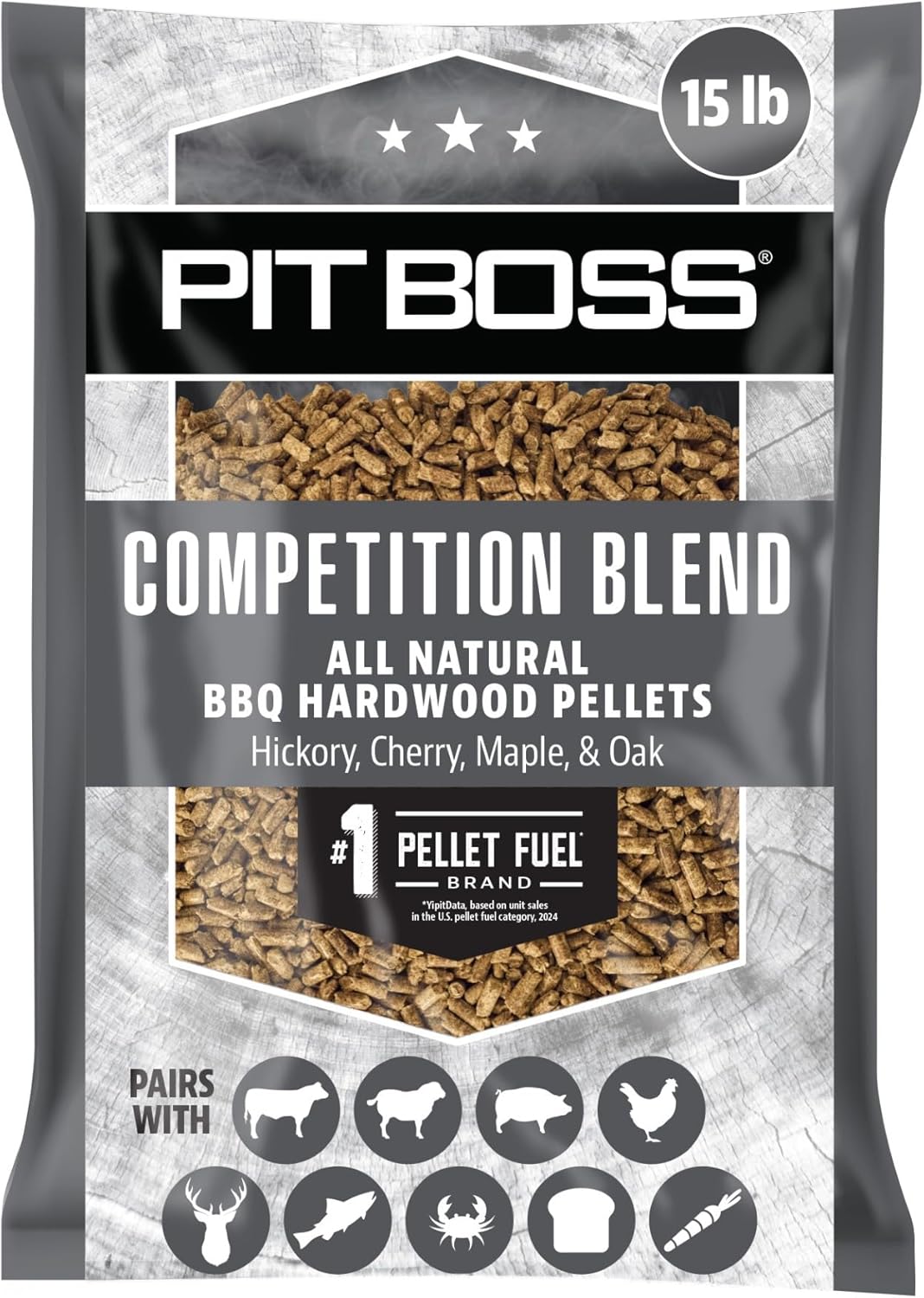
Here's what a pellet actually is: sawdust from milled hardwood, pressed under heat and pressure until the wood's own lignin melts and re-hardens as glue. No binder gets added because none is needed, the wood glues itself. That's the whole trick behind the no fillers claim, and it's also why color varies bag to bag: different trees, different regions, different mineral content in the wood, none of which affects how it burns. Moisture is the part that actually matters. Too wet and the pellet swells, breaks apart in the hopper, and burns dirty. Keeping moisture low means quicker ignition and steadier heat, which is what lets a long smoke hold temperature for hours instead of drifting. The Competition Blend mixes maple, hickory, cherry, and oak instead of one wood, so the smoke profile is rounder rather than one note, useful on a mixed cook where ribs and vegetables share the same rack. Length matters more than people expect too. Pellets that run too long wedge together above the burn pot and cut the auger feed, stalling the fire mid-cook. These sit in the standard three quarter to one and a quarter inch range, which is why they feed through any major pellet grill or smoker, not just a Pit Boss. The trade-off for skipping a binder is dust. Without anything holding fine particles to the pellet's surface, more of it shakes loose in the bag and in the hopper. Less ash once it's burning, more fine dust before it does.
So you're not buying a wood flavor, you're buying a burn you can trust to hold steady for hours. The maple, hickory, cherry, and oak mix is the bonus, the real product is the low moisture and consistent length that keep the auger fed and the temperature flat. Worth it once you've felt a cheaper bag jam mid-cook.
Who pit boss competition blend pellets are for, and who should skip them
Worth it if
- you own any pellet grill or smoker, not just a Pit Boss
- you run long, low-and-slow cooks that need steady heat for hours
- you want a blended smoke profile rather than one single wood
- you're tired of pellets swelling or jamming the auger
Skip it if
- you want a bag that produces almost no dust
- you're chasing one specific single-wood flavor like straight mesquite
- you only fire up the grill once or twice a season
Not for anyone chasing one pure single-wood smoke flavor rather than a blend.
So, are pit boss pellets any good, the verdict
If you already own a pellet grill and use it more than a few weekends a year, this is a quiet yes, the pellets do their job and get out of the way. If you're chasing one very specific single-wood flavor, like straight mesquite or pure oak, a blend defeats the purpose and you should buy that wood alone. And if a dusty bag bothers you more than clean, fast-lighting pellets, keep a small vacuum near the hopper.
Once this bag replaces whatever you were using before, the guesswork about ignition and heat swings goes away. Day one looks like this: hopper filled, igniter clicks, and within minutes you're holding steady temperature instead of chasing it for the first twenty minutes of a cook. The dust is real, so keep a small brush or vacuum near the hopper and it stops being a surprise and becomes a small chore. That's a fair trade for a pellet that behaves the same way every single bag.
Amazon shoppers rate it 4.6 out of 5 across 508 ratings. That is their number, not ours.
Before you go
What are the best pellets for a pellet smoker?
Look for low-moisture, blended hardwoods with no added fillers or binders, since moisture and additives cause uneven burns and swollen pellets.
Are Pit Boss pellets as good as Traeger pellets?
Yes, both are 100% hardwood with similar moisture engineering. Choice depends on wood blend preference and flavor profile.
Which pellets are better, bear mountain or Pit Boss?
Both make all-natural hardwood pellets without binders. Choose based on wood blend preference and local availability.
Does Pit Boss use fillers in their pellets?
No, Pit Boss pellets are 100% hardwood pressed with heat, pressure, and natural lignin only - no added binders or fillers.
By the numbers
earn an unconditional yes at full priceOut of 110 lawn & garden products we have reviewed. This one is a yes with a condition attached.
Verdict datasetQuestion indexCC BY 4.0
Full spec sheet
| Brand Name | PIT BOSS |
|---|---|
| Unit Count | 1 Count |
| Number of Packs | 1 |
| Item Type Name | 100% All-Natural Hardwood BBQ Pellets |
| Model Number | 55135096S |
| Manufacturer Part Number | 55135096S |
| Flavor | Competition Blend |
| Item Form | Pellet |
Keep comparing
More PIT BOSS

Elsewhere in lawn & garden


More lawn & garden reviews.