Are Kelly tires any good, or just cheap?
Worth it, if your driving is as sensible as the tire
Why you're standing at the tire counter comparing two prices
You're on your knees by the front wheel, thumbnail catching the wear bar on a set that gave you four honest years, and the guy at the counter just quoted two prices forty dollars apart for what looks like the same size. Are Kelly tires any good, or is that gap the whole story right there. Your knees are cold on the concrete. The car needs an answer, not a debate about brand names.
How the Kelly Edge Touring Plus actually grips the road
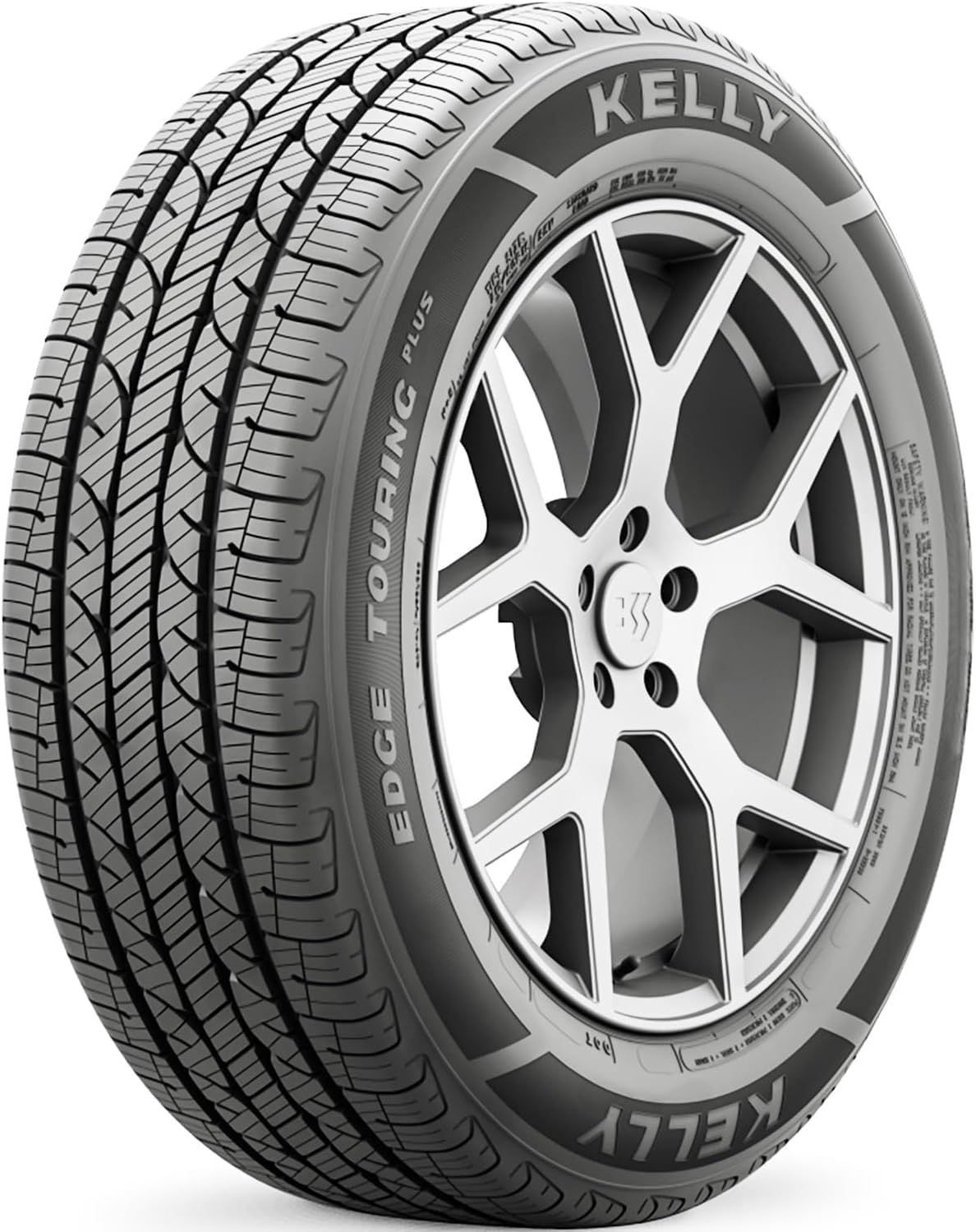
Start with who's actually making the thing, because that answers half the question by itself. Kelly is Goodyear's budget line, not a stranger brand slapping a name on rubber. The Edge Touring Plus gets Goodyear's tread engineering with the price tag adjusted down, which is a different thing from a discount tire built to a discount standard. Look at what the tread is actually doing. The biting edges on the tread blocks are cut aggressively enough to grip loose snow and slush, digging in the way a boot tread does on ice, not just riding on top of it. Behind those edges, sweeping grooves run through the tread to move water and slush out from under the contact patch, which is the whole trick to wet traction: a tire doesn't grip water, it has to get rid of it fast enough to touch actual pavement. The rubber itself is a silica compound, which stays more pliable in cold than a straight carbon-black mix, so the grip doesn't fall off a cliff once the temperature does, and it wears more evenly over the life of the tire. The tread pattern is symmetrical, which sounds boring until you're the one rotating tires in your driveway. Symmetrical means no directional arrows to track, no left-and-right pairs to keep straight, any tire goes on any corner. That's a maintenance decision built into the tread, not an accident. None of this is exotic. It's a competent, conventional all-season design, built by a company that also builds the tires costing twice as much, minus whatever that other tire spends on ultimate cornering grip or tread life warranties.
You're not buying a lesser tire, you're buying the same engineering with the performance ceiling trimmed off. The trade is honest: you give up some ultimate grip and warranty mileage, and you keep everything that makes a daily commute uneventful. That's the whole calculation, and it holds up whether you're comparing it to a Goodyear or a Cooper.
Who the Kelly Edge Touring Plus fits, and who should spend more
Worth it if
- you drive a sedan or crossover mostly on paved roads
- your climate sees rain and occasional light snow, not sustained deep winter
- you want a competent tire without paying for a performance ceiling you'll never use
- you'd rather rotate a symmetrical tread than track directional tires
Skip it if
- you drive in serious mountain or heavy-snow winters regularly
- you tow or haul near the tire's load limits often
- you want maximum tread life warranty over a low upfront price
- you're chasing sporty cornering grip over daily comfort
Not for serious winter mountain driving, towing, or anyone chasing performance cornering grip.
Are Kelly tires any good: the verdict
If you drive a sedan or crossover on regular roads in a climate that sees rain and the occasional light snow, this is a quiet yes, the tire does the job and gets out of the way. If you're chasing performance handling, driving through serious mountain winters, or hauling real weight regularly, spend up for a tire built for that specific job.
Once these go on, the thing that disappears is the low-grade worry that's been riding along with the old worn set, the hydroplane flinch in heavy rain, the slide of loose gravel on a cold morning. Day one is unremarkable in the best way: the car tracks straight, the ride is quiet, and you stop thinking about the tires entirely, which is the actual job of a tire. That's the payoff for a sensible daily driver, not a thrill, just one less thing on the list.
Amazon shoppers rate it 4.7 out of 5 across 109 ratings. That is their number, not ours.
Before you go
Who makes Kelly brand tires?
Kelly is owned and built by Goodyear, so it's Goodyear engineering sold under a budget-focused name rather than a separate manufacturer.
Which is a better tire, Goodyear or Kelly?
Goodyear's own-name tires generally sit above Kelly on ultimate grip, tread life, and options, but Kelly borrows the same underlying technology at a lower price, so the gap is smaller than the price difference suggests.
What tire is better, Kelly or Cooper?
Cooper, also part of the Goodyear family since 2021, occupies a similar budget-to-mid tier as Kelly, and the honest answer is they trade places depending on the specific model and size, not one brand across the board.
Are Kelly Tyres a good brand?
Yes for a daily driver in normal conditions, since you're getting Goodyear-grade tread engineering at a lower price, but it's not the brand to reach for if you need performance handling or extreme winter capability.
By the numbers
earn an unconditional yes at full priceOut of 137 automotive products we have reviewed. This one is a yes with a condition attached.
other reviews field the same questionAre Kelly Tyres a good brand?
comes up across our automotive coverage, not just here — one of the things worth settling before you choose.
Verdict datasetQuestion indexCC BY 4.0
Full spec sheet
| Rim Size | 16 inches |
|---|---|
| Load Index | 91 |
| Speed Rating | V |
| Load Capacity | 1356 pounds |
| Tread Type | Symmetrical |
| Maximum Pressure | 51 psi |
| Automotive Fit Type | Universal Fit |
| Load Range | SL |
Keep comparing



More automotive reviews.