Are Armstrong tires any good for everyday driving?
Worth it for commuters, not for haulers
Why the cheap tire on the rack makes you nervous
You're at the shop, elbow on the counter, staring at a wall of tires with a name you've never heard before on the sidewall. The guy quoting you the Armstrong is thirty dollars a corner cheaper than the Michelin next to it, and your gut does the thing it always does with a bargain: it asks what's missing. That's the real question sitting under are Armstrong tires any good: is this a shortcut that costs you nothing, or one that costs you traction on a wet on-ramp at seventy.
How Armstrong's Blu-Trac PC actually holds the road
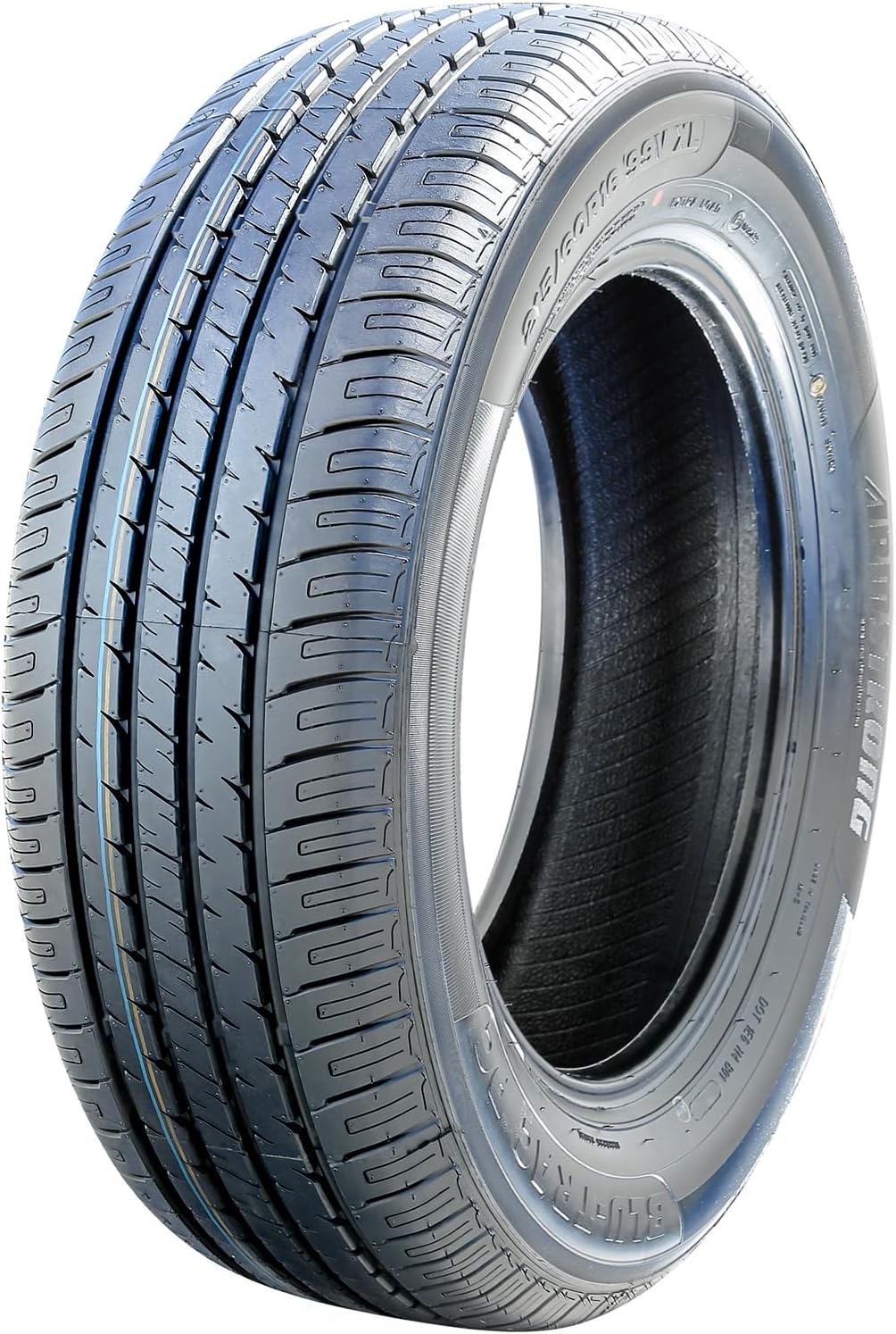
Start with the numbers on the sidewall, because that's where a tire tells you the truth before you ever drive on it. The 215/60R16 99V XL means this is an Extra Load tire, built with reinforced sidewall plies to carry more weight per tire than a standard-load version of the same size, which is why the load index reads 99 instead of something lower. That matters if you're running a heavier sedan, a loaded minivan, or a crossover with a full trunk on a road trip. The tread pattern is non-directional, the practical choice for an all-season touring tire: it moves water and light snow off the contact patch without needing a specific rotational direction, so any tire mounts on any corner and rotation at the shop stays simple. The UTQG rating, 700 for treadwear and AA for traction, is the manufacturer's own comparative grade, and a 700 number paired with an 85,000-mile estimate puts this squarely in daily-driver territory rather than performance territory. That's the trade a touring tire makes: softer compound and taller sidewall for a quieter, more forgiving ride, in exchange for less outright grip than a summer or ultra-high-performance tire gives you. The V speed rating, 149 mph, is far beyond anything a commuter will ever ask of it, which tells you it exists to satisfy a spec sheet, not a real driving need. Radial construction and a single black sidewall are unremarkable, exactly what you'd expect on a tire built to be mounted, forgotten, and replaced on schedule.
So the question was never really whether the name on the sidewall is prestigious, it's whether the load rating, tread design and treadwear number match the car and the driving you actually do. An XL touring tire with a 700 treadwear grade is built for exactly one job: carrying a family car through ordinary weather for a long time, quietly. If that's your job, the badge doesn't change the outcome.
Who the Armstrong Blu-Trac PC tire is for, and who should skip it
Worth it if
- You drive a passenger car or crossover that calls for a 215/60R16 XL-rated tire
- You want a quiet, comfortable ride for daily commuting rather than aggressive handling
- You're replacing worn tires on a budget and don't need a name-brand badge
- You drive in mixed conditions like rain and occasional light snow, not deep winter
Skip it if
- You're loading a truck or hauler, this is a passenger tire, not a light-truck tire
- You want maximum grip for spirited or track driving
- You live somewhere winter is a real, sustained season
- You want the resale confidence of a major tier-one brand name
Not for trucks, track days, or serious winter driving.
Are Armstrong tires any good: the verdict
If you're replacing worn tires on a passenger car or crossover and want a comfortable, quiet ride without paying for a name, this is a reasonable pick. If you're hauling a truck, chasing grip on a canyon road, or driving somewhere winter actually means winter, look elsewhere, this tire was never built for that job.
Picture the boring version of next Tuesday: you pull out in the rain, the tire holds its line onto the highway, and you don't think about it again until the next rotation. That's the whole job a touring tire does when it's built right, it disappears into the background of your commute. The specs here, the XL load rating, the moderate treadwear number, the all-season tread, line up with what a budget commuter tire is supposed to deliver, nothing more, nothing less.
Amazon shoppers rate it 4.8 out of 5 across 447 ratings. That is their number, not ours.
Before you go
What company makes Armstrong tires?
Armstrong is an independent budget tire brand distributed internationally rather than a house line of one of the major tier-one makers like Michelin or Bridgestone, which is part of why a 99V XL tire like this prices well under the big names.
What brand of tires should I stay away from?
There's no single brand worth a blanket avoidance, the safer test is whether the tire carries a proper UTQG rating, a load index matching your vehicle, and a warranty you can actually read, that matters more than the name on the sidewall.
What are the top 3 best tire brands?
Michelin, Bridgestone and Continental are the names most consistently cited as top performers across categories, though best still depends on whether you need a performance, touring or winter tire.
What are consumer reports on Armstrong Tires?
Armstrong doesn't get the same depth of independent lab testing as the major brands, so most of what's out there is retail buyer feedback rather than formal lab data, and that feedback leans positive on ride comfort and wet traction for a budget tire.
By the numbers
earn an unconditional yes at full priceOut of 137 automotive products we have reviewed. This one is a yes with a condition attached.
other reviews field the same questionWhat brand of tires should I stay away from?
comes up across our automotive coverage, not just here — one of the things worth settling before you choose.
Verdict datasetQuestion indexCC BY 4.0
Full spec sheet
| Rim Size | 16 inches |
|---|---|
| Load Index | 99 |
| Speed Rating | V |
| Load Capacity | 1709 pounds |
| Tread Type | Non-Directional |
| Maximum Pressure | 50 psi |
| Automotive Fit Type | Universal Fit |
| Load Range | XL |
Keep comparing


More automotive reviews.