Upright vs Recumbent Exercise Bike: Which One Fits Your Ride?
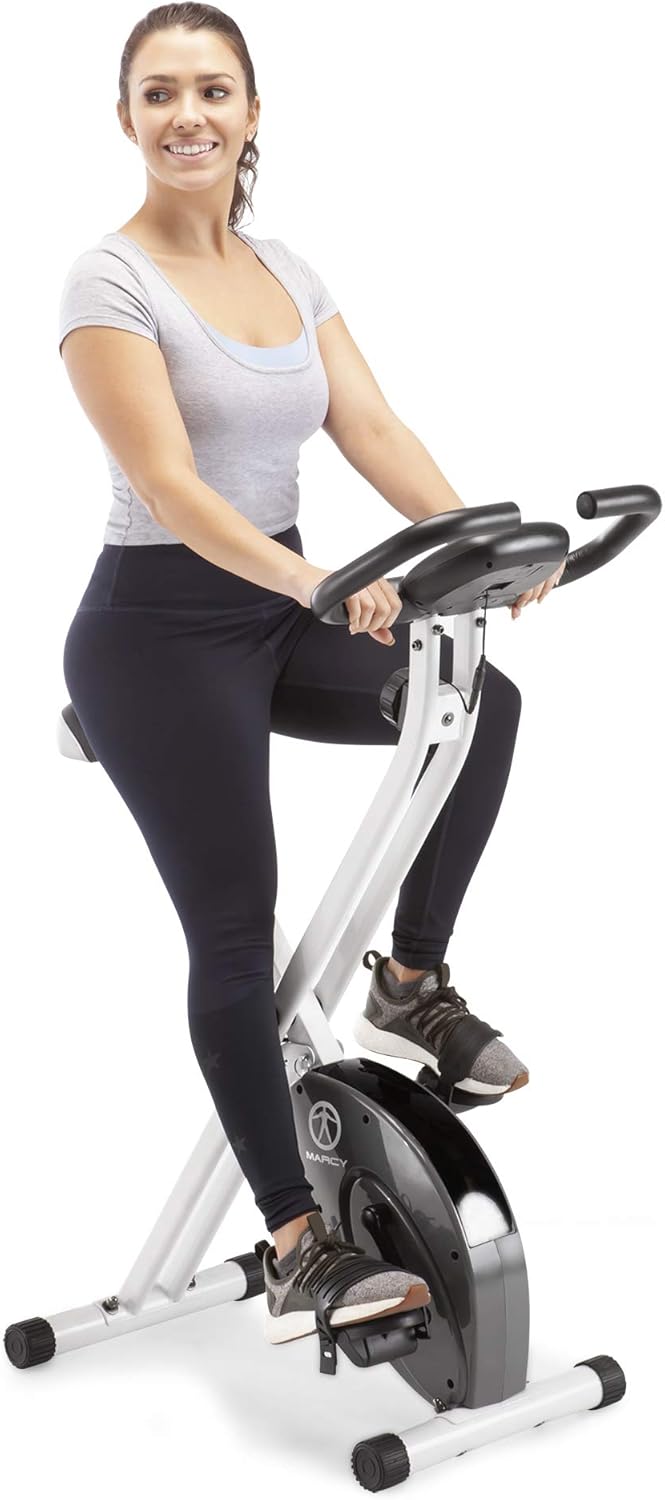
Marcy Foldable Upright Exercise Bike with Adjustable Resistance for Cardio Workout & Strength Training - Multiple Styles Available
Worth it, with one seat caveat
- you want a daily cardio habit in a room that doesn't have space for a permanent machine
- you ride early or late and need something that won't wake the house
- you're under 250 lbs and between 5'1 and 6'3

Recumbent Exercise Bike for Home
Worth it, if low impact is the point
- knee or joint pain has been stopping your workouts
- more than one person with different heights will use the bike
- you want a quiet machine for early mornings or shared walls
By the numbers: both score 4/5 on our verdict scale — the split here is audience, not quality. Full dataset.
Upright vs Recumbent Exercise Bike
You're standing in the space where the treadmill used to be, trying to picture two different machines and one decision: upright vs recumbent exercise bike, and which one you'll actually ride past week three. The upright is the one that folds against the wall and disappears when company comes over. The recumbent is the one with the bucket seat and backrest that looks like it belongs in a waiting room. Both promise cardio. Only one matches how your knees, your space, and your motivation actually behave on a Tuesday morning.
Here's what actually changes between the two: where your body puts its weight while you pedal. On the upright, you're perched over the pedals like a road bike, weight balanced through your core and glutes, feet driving straight down. That posture is compact, it's why the folding upright tucks down to a sliver and disappears into a closet, and why it engages the same muscles a real bike ride does. Swing your legs into a recumbent and the geometry flips. You're reclined into a bucket seat with a full backrest, legs extended out in front like you're pedaling from a lounge chair. That reclined angle takes the load off your lower back and off the front of your knee, which is why it shows up as the pick for rehab stretches and joint pain. The trade for that comfort is footprint, the recumbent's seat rides on a rail so the whole machine runs close to four feet long, versus the upright's folded footprint that barely eats floor space at all. Same cardio, different joints doing the work.
Choose the upright exercise bike if
- You want a bike that folds away and disappears when you're done riding
- You're under 250 lbs and want a compact daily cardio habit
- You want the pedal-and-lean feel closer to a real road bike
- Quiet early morning rides matter more than a cushioned seat
Choose the recumbent exercise bike if
- Knee or lower back pain has been sidelining your workouts
- More than one person, different heights, will share the bike
- You have the floor space for a machine pushing close to four feet long
- You're easing back into exercise after time off or an injury
Neither bike wins the cardio question, they answer different physical ones. If your knees and back are fine and your priority is a machine that vanishes into a closet between rides, the upright folds smaller and still delivers a real pedaling workout. If joint pain, a bigger weight range, or multiple riders in the house is the actual obstacle, the recumbent's reclined seat and backrest remove the excuse that's been stopping you. Both verdicts here land on worth it, so this isn't about a winner, it's about which obstacle stands between you and Tuesday's ride.
Before you go
Is a recumbent bike better for bad knees than an upright?
Yes, the reclined seating and backrest take load off the front of the knee that an upright's perched posture puts there, which is why it's the pick for rehab and joint pain.
Does an upright bike save more space than a recumbent?
Yes, the upright folds to a compact footprint for storage, while the recumbent's sliding seat rail keeps its footprint near four feet long even parked.
Can one exercise bike work for a household with different heights?
Yes, the recumbent's adjustable seat rail is built for multiple riders of different heights, where the upright's fixed frame fits a narrower height range.
Full verdicts: Marcy Foldable Upright Exercise Bike with Adjustable Resistance for Cardio Workout & Strength Training - Multiple Styles Available · Recumbent Exercise Bike for Home