Spray vs Lotion Sunscreen: Which Actually Gets Reapplied?
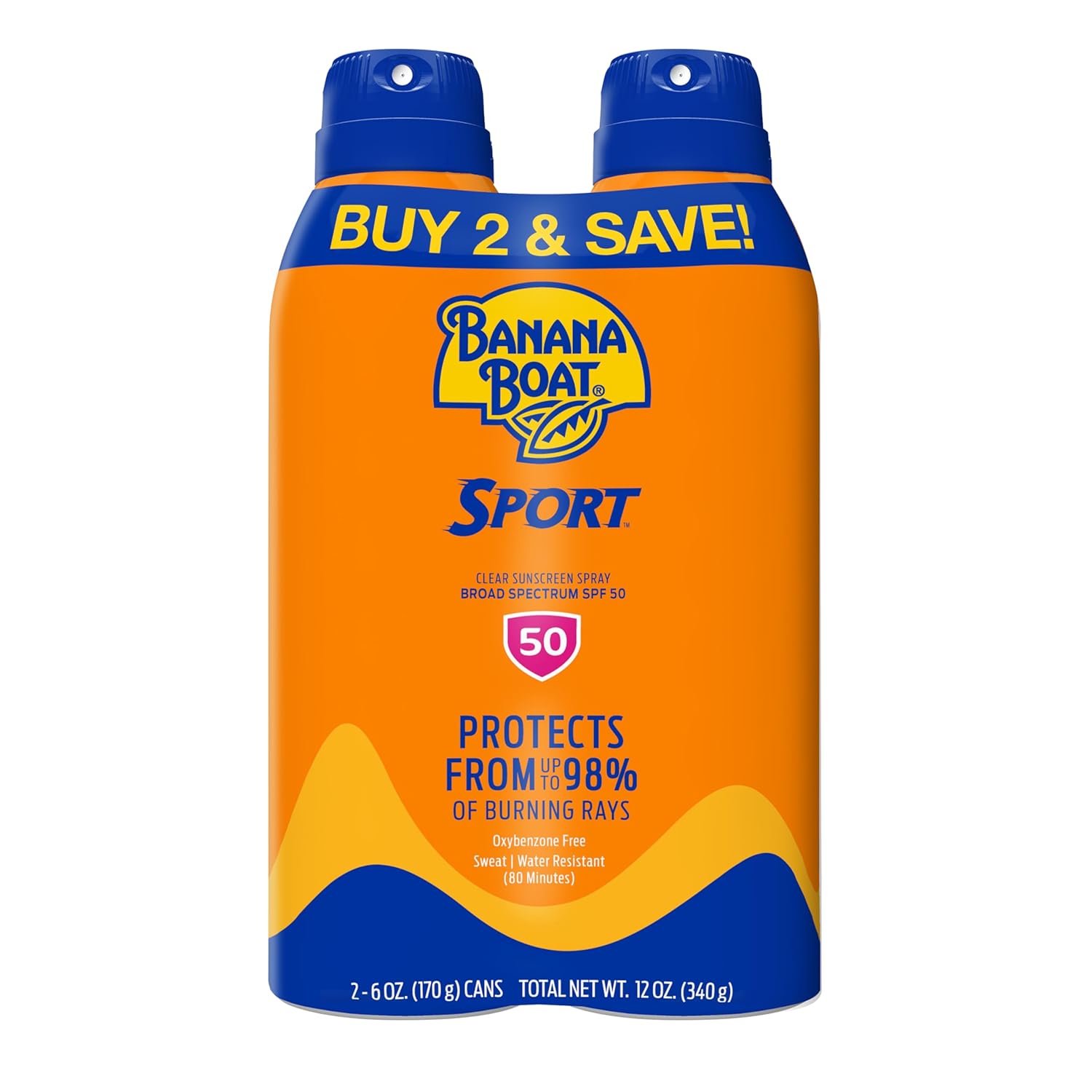
Banana Boat Sport SPF 50 Sunscreen Spray
Worth it, with a fragrance and face caveat
- you need to cover a squirming kid or your own body fast
- you're sweating or swimming for over an hour and need real reapplication
- you want scalp, ear, and neck coverage a hand-applied cream tends to miss

Blue Lizard Sensitive Mineral SPF 50 Sunscreen Lotion
Worth it, if you don't mind the white cast
- your skin reacts to chemical sunscreen filters
- you want reef-friendly, fragrance-free sun protection
- you're okay with a visible white layer in exchange for gentleness
By the numbers: both score 4/5 on our verdict scale — the split here is audience, not quality. Full dataset.
Spray vs Lotion Sunscreen
You're standing in the sunscreen aisle with a squirming kid and a countdown to leave for the beach, staring at two very different bottles: a spray can and a lotion tube. The spray vs lotion sunscreen decision looks like a coin flip until you notice what each format is actually built to do differently once it hits skin.
The mechanism is buried under the glow, let's dig it out. A spray delivers propellant-driven mist that lands broad spectrum SPF 50 protection across skin in seconds, which is why it's the format that gets reapplied on a squirming kid or mid-hike without a production. But that speed is also its weak point: mist can drift or land thin, so a spray only works as well as the extra seconds you spend rubbing it in afterward. A lotion works the opposite way. You're forced to spread it by hand, which is slower, but that friction is what tells you where you've covered and where you haven't. When the lotion is mineral, like the one in this comparison, that hand-applied layer isn't absorbing into skin at all, it's sitting on top as a physical UV blocker, reflecting rays rather than reacting with them chemically. That's a separate axis from spray versus lotion, but it's why this particular pick also reads gentler on reactive skin. The real day-to-day tradeoff isn't which chemistry blocks more UV, both are rated broad spectrum SPF 50, it's whether you'll actually reapply the fast one or tolerate rubbing in the slow one.
Choose the spray sunscreen if
- You need to cover a squirming kid or your own body fast
- You're sweating or swimming past the hour mark and need quick reapplication
- You want scalp, ear, and neck coverage a lotion tends to miss
Choose the lotion sunscreen if
- Your skin reacts to chemical sunscreen filters
- You want a fragrance-free, reef-friendly formula
- You're fine trading a visible white cast for gentleness
Neither format wins outright, our verdicts land as worth it, with a caveat, on both sides. Reach for the spray when speed and reapplication compliance decide whether sunscreen actually goes on at all, especially for kids or long outdoor stretches. Reach for the mineral lotion when your skin has fought back against a chemical formula before, the white cast is the fair trade for that. With ordinary skin and no urgency problem, either does the core job of broad spectrum SPF 50 protection.
Before you go
What lasts longer, sunscreen spray or lotion?
No, both formulas here are rated for up to 80 minutes of water and sweat resistance, so your reapplication schedule matters more than the format.
Is it better to rub in spray sunscreen?
Yes, rubbing spray in after applying closes the gaps the mist misses and gives you more even coverage than spraying alone.
What are the downsides of using sunscreen spray?
The main downsides are missed patches if you skip rubbing it in, and a fragrance some find too strong, especially near the face.
Full verdicts: Banana Boat Sport SPF 50 Sunscreen Spray · Blue Lizard Sensitive Mineral SPF 50 Sunscreen Lotion