Rowing vs Treadmill: Which One Actually Fits Your Home Workout?

Merach Q1S Magnetic Rowing Machine Indoor
Worth it
- you want quiet, low-impact full-body cardio at home
- you're tired of single-rail rowers that wobble under a hard pull
- you don't mind tracking workouts through your own phone or tablet
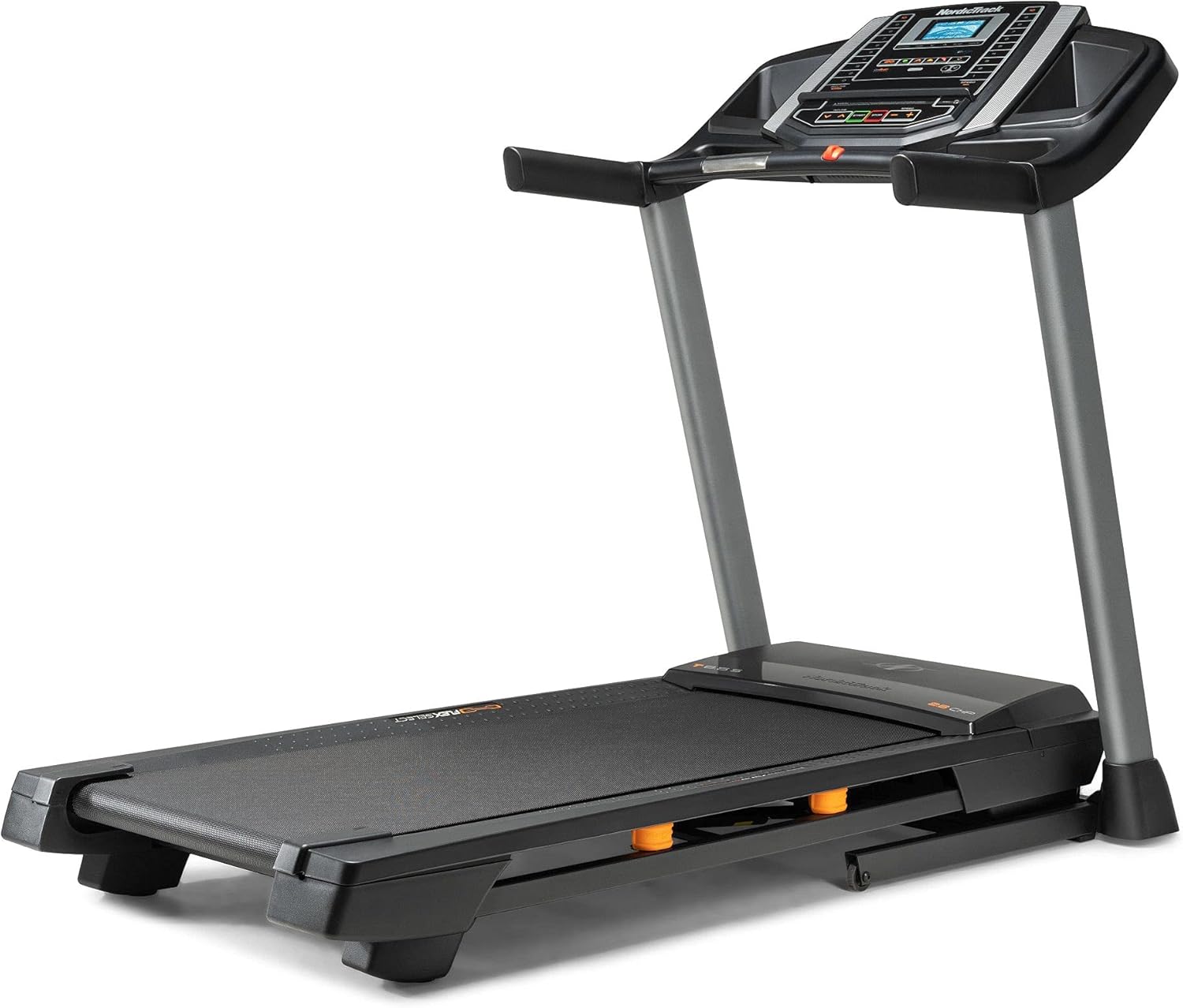
NordicTrack T Series Treadmill
Worth it, if you'll use what it's actually selling
- you'll use a heart rate monitor and let ActivePulse manage your pace
- incline variety matters to your training, not just flat miles
- you already plan to keep an iFIT membership going
By the numbers: Merach Q1S Magnetic Rowing Machine Indoor scores 5/5, NordicTrack T Series Treadmill 4/5 on our verdict scale. Full dataset.
Rowing vs Treadmill
You're standing in the living room picturing where either machine goes, and that's really the rowing vs treadmill question in miniature. One folds flat and barely makes a sound, the other needs a lane of floor and announces itself with every footstrike. Before you look at price tags, figure out what your session actually needs: a quiet full-body pull you can do at 6am without waking the house, or a moving belt that pushes incline and pace at you. Both get your heart rate up. They get there through completely different motions, and that changes who should own which one.
A rowing machine like the Merach Q1S moves you through a full-body pull, legs drive first, then back, then arms, all against magnetic resistance on a dual rail that keeps the seat tracking straight instead of wobbling under a hard stroke. No feet pounding a belt means no impact loading your knees or your downstairs neighbor's ceiling. A treadmill works the opposite way: your feet absorb the belt's motion stride after stride, and the machine's real trick is what it does with that motion, incline that changes the muscles you're loading and, on something like the NordicTrack, a heart rate strap paired with ActivePulse that adjusts speed and incline to keep you in a target zone automatically. That's coaching, not just cardio. But that coaching mostly lives behind an iFIT subscription, so a treadmill bought to just run flat miles is a sturdy belt with a ceiling on what it can actually do for you. The rower has no such ceiling to unlock, what you see is what you row.
Choose the rowing if
- You want quiet, low-impact full-body cardio you can do without waking the house
- You're done with single-rail rowers that rock under a hard pull
- You're fine tracking workouts on your own phone instead of a built-in screen
- You need something that folds away when the session's over
Choose the treadmill if
- You'll actually wear the heart rate strap and let incline and coaching do their job
- Incline variety matters to your training, not just flat walking or jogging
- You're already planning to keep an iFIT membership running
- You need a treadmill that folds up in a small room
If quiet, full-body, low-impact cardio that disappears when you're done is the priority, the rower is the straightforward yes here. The treadmill earns its higher price only if you'll actually use the incline and heart rate coaching, since without the iFIT membership you've bought an expensive flat belt. Someone chasing simple, sweaty miles with no subscription is better served by a simpler treadmill or the rower itself.
Before you go
Can you get in shape just by rowing?
Yes, if you row consistently, since the stroke trains your legs, back and arms together, giving you full-body conditioning without needing a treadmill running alongside it.
Is rowing or treadmill better for weight loss?
Whichever machine you'll actually use five days a week wins, since consistency burns more than either machine's design ever will on its own.
Full verdicts: Merach Q1S Magnetic Rowing Machine Indoor · NordicTrack T Series Treadmill