Humidifier vs Dehumidifier: Which One Do You Actually Need?

Levoit Top Fill Humidifiers for Bedroom
Worth it for easy, quiet bedroom humidity
- You want a bedroom or nursery humidifier you'll actually keep topped up because filling it is quick
- You're sensitive to noise at night and want something that won't hum you awake
- You'd rather clean a tank in two minutes than fight a narrow bottom-fill opening
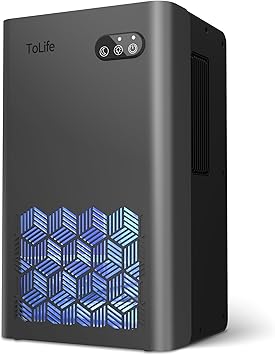
ToLife Dehumidifiers for Home
Worth it, for the right size room
- your space is a bathroom, closet, or single small bedroom
- quiet operation under 30 decibels matters more than raw drying speed
- you don't mind emptying a 95 ounce tank every day or two
By the numbers: Levoit Top Fill Humidifiers for Bedroom scores 5/5, ToLife Dehumidifiers for Home 4/5 on our verdict scale. Full dataset.
Humidifier vs Dehumidifier
You wake up with a dry throat, or you open the closet to a musty smell that won't lift, and you land on the same aisle wondering which box solves it. A humidifier vs dehumidifier question sounds like a coin flip until you name what's actually wrong with your air. One adds moisture, one pulls it out, and buying the wrong one means you've spent money making a problem worse, not better.
A humidifier works by putting water into the air as fine mist, so a dry bedroom stops pulling moisture out of your throat, skin and sinuses while you sleep. That's the whole mechanism, and it's why the top-fill design matters more than people expect: a machine that's a hassle to refill gets used for three nights and then sits empty on a shelf, which means zero humidity added, not less.
A dehumidifier runs the opposite direction. It condenses moisture out of the air and collects it in a tank, which is what actually stops a closet or bathroom from staying damp and musty. The ToLife unit uses semiconductor condensation rather than a compressor, and that trade is real: quieter operation, but modest pulling power against a big square-footage claim on the box. It'll keep a small enclosed room in check overnight. It won't dry out an actual basement or a whole floor, no matter what the label promises, because the tank and the technology behind it aren't built for that scale.
Choose the humidifier if
- Your bedroom or nursery air feels dry and you want relief you'll actually keep up with because refilling is quick
- You're noise-sensitive at night and a humming machine would wake you
- You'd rather wipe out a wide-mouth tank than fight a narrow bottom-fill bottle
Choose the dehumidifier if
- A specific small space, a closet, bathroom or bedroom, stays damp or smells musty and you want it quiet overnight
- You need something portable enough to carry room to room rather than fixed in one spot
- You want a night-light bundled in without buying a second device
If the problem is dry air, a scratchy throat, static, a nursery that needs steady moisture, the humidifier is the right tool, and it's worth it specifically because the top-fill design means you'll actually keep using it. If the problem is damp air in one contained room, the dehumidifier earns its keep too, but only at that scale. Neither one is built to cover a large open room or dry out a real basement, and buying either expecting whole-house results is where people end up disappointed with a perfectly fine machine.
Before you go
How do I know if my room needs a humidifier or dehumidifier?
Static shocks, a dry throat or cracking skin point to a humidifier; a musty smell or damp, clammy closet points to a dehumidifier. The symptom tells you the direction.
Do I need a humidifier or dehumidifier for a stuffy nose?
Yes, a humidifier is the right tool for a stuffy nose, since dry air is usually what's irritating your throat and sinuses overnight, not damp air.
Do I need a humidifier or dehumidifier in summer?
No, not automatically, run a dehumidifier only if a room turns sticky or musty in summer humidity; a humidifier addresses dry air, which is less common that season.
Full verdicts: Levoit Top Fill Humidifiers for Bedroom · ToLife Dehumidifiers for Home