Electric Rice Cooker vs Pressure Cooker: What's the Real Difference?

Elite Gourmet ERC006SS 6-Cup Electric Rice Cooker with Stainless Steel Inner Pot
Worth it, if you want simple over fancy
- you want one button and no guesswork
- you'd rather scrub a stainless pot than replace a flaking nonstick one
- you're cooking for one to four people
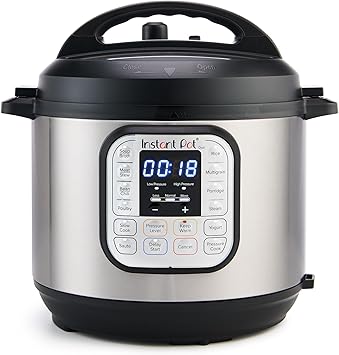
Instant Pot Duo 7-in-1 Electric Pressure Cooker
Worth it, if you actually cook from scratch
- you cook from raw ingredients most weeknights
- you're replacing a slow cooker, rice cooker, and steamer with one thing
- you want stews and beans done in under 30 minutes
By the numbers: both score 4/5 on our verdict scale — the split here is audience, not quality. Full dataset.
Electric Rice Cooker vs Pressure Cooker
Standing in the aisle with an electric rice cooker vs pressure cooker decision in your head? Here's what I'd want to know first: they're not really competing for the same job. One is a thermostat that watches a pot of rice so you don't have to. The other is a sealed pot that builds pressure to cook whole meals fast, then swaps in for your slow cooker and steamer too. The right pick depends on whether you're solving 'I want good rice' or 'I want fewer appliances on my counter.'
A rice cooker's trick is simple: it heats until the water's gone, the temperature spikes, and a thermostat clicks off before your rice scorches. That's the whole mechanism, no sensors, no programs, just a pot that knows when it's done. You get one job, done well, and you can walk away the moment you press start.
A pressure cooker works on a completely different principle. It seals the lid, traps steam, and lets pressure build until the boiling point climbs well past normal. That's why beans and stews that take an hour on the stove finish in under thirty minutes inside one. The trade is a gasket to check, a valve to manage, and a program or two worth learning. But because it can steam, sauté, and slow cook too, it can replace the rice cooker, the slow cooker, and the steamer taking up cabinet space. The rice cooker never asks anything of you after you press start. The pressure cooker asks a little more attention, and in exchange does a lot more work.
Choose the electric rice cooker if
- You want simple rice that just works, no presets to learn
- You're cooking for one to three people, maybe scaling up to six cups
- You like a glass lid you can watch and a pot you can serve straight from
Choose the pressure cooker if
- You cook from raw ingredients most weeknights
- You're ready to swap a slow cooker, rice cooker, and steamer for one pot
- You want stews and beans done in under thirty minutes
- You're short on counter or cabinet space
If all you want is good rice without fuss, the electric rice cooker wins, it's smaller, cheaper, and never asks you to learn a program. If dinner in your house involves raw ingredients most nights and you're tired of storing three appliances for one meal, the pressure cooker earns its keep fast, even at more than three times the price. Buying both because you cook occasionally? Skip it, that's clutter with two warranties instead of one.
Before you go
Can a pressure cooker replace a rice cooker entirely?
Yes, it has a rice setting and can handle multi-cup batches, but it takes more monitoring at the vent and a gasket to keep clean, so a dedicated rice cooker still wins on simplicity.
Is the price gap between them worth it?
Only if you're replacing multiple appliances, not just adding one. If you already own a slow cooker and steamer you like, the pressure cooker's extra functions go unused.
Full verdicts: Elite Gourmet ERC006SS 6-Cup Electric Rice Cooker with Stainless Steel Inner Pot · Instant Pot Duo 7-in-1 Electric Pressure Cooker