Dehumidifier vs DampRid: What Actually Fits Your Room?
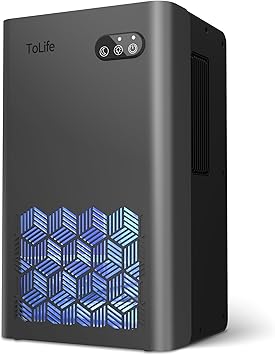
ToLife Dehumidifiers for Home
Worth it, for the right size room
- your space is a bathroom, closet, or single small bedroom
- quiet operation under 30 decibels matters more than raw drying speed
- you don't mind emptying a 95 ounce tank every day or two

DampRid Fragrance Free Disposable Moisture Absorber & Odor Remover with Activated Charcoal
Worth it for small, closed spaces, not a dehumidifier substitute
- You've got a small enclosed space like a closet, cabinet, or bathroom
- You want something passive with no cords, no electricity, no noise
- You're storing an RV, boat, or gym bag somewhere damp for a while
By the numbers: both score 4/5 on our verdict scale — the split here is audience, not quality. Full dataset.
Dehumidifier vs Damprid
You've got a damp smell somewhere in the house and two very different products promising to fix it. The dehumidifier vs DampRid question sounds like a brand choice, but it's really a size question in disguise. One runs on electricity and pulls moisture out of the air continuously. The other sits there quietly and absorbs it over weeks. Picking wrong means either overpaying for power you don't need, or underpowering a space that needed the real machine.
A compact electric dehumidifier, like the ToLife unit, works by actively drawing air across a cooling element, condensing the moisture into a tank you empty every day or two. That's an active process, which is why it can keep pace with a small bathroom, closet, or single bedroom, and why it's quiet enough to sit on a nightstand under 30 decibels. DampRid does the opposite job with no moving parts at all. Its crystals absorb ambient moisture passively over roughly 60 days per pack, with no cord, no noise, and nothing to empty until the crystals dissolve into liquid at the bottom of the container. Neither one is built to lower humidity across an open room or a basement. The dehumidifier's small tank and modest engine can't keep up with that volume of air, and DampRid's passive absorption rate is even slower. What changes your day is maintenance rhythm: the dehumidifier asks you to empty a tank on a schedule, DampRid asks you to check a container every couple of months and toss it when it's spent. Neither one is a substitute for a real compressor dehumidifier sized for a whole room.
Choose the dehumidifier if
- You want something you can actually monitor and empty, and quiet operation matters more than zero effort
- Your damp space is a bathroom, closet, or single small bedroom, not a whole basement
- You'd rather manage a tank every day or two than replace a disposable pack every couple of months
Choose the damprid if
- You want no cord, no noise, and nothing to plug in at all
- The space is small and closed, a cabinet, closet, RV, or boat, not a lived-in room
- You're storing something for weeks and want a set-it-and-forget-it fix, not daily upkeep
Both of these are honest about doing a small job well and neither one hides that. If you need moisture pulled out of a bathroom or bedroom actively, and you don't mind emptying a tank, the electric dehumidifier is the right tool. If your problem is a musty closet, cabinet, or stored vehicle and you'd rather not touch it for two months, DampRid does that job for a fraction of the price. Neither one belongs in a basement conversation. That job needs a compressor dehumidifier built for a much bigger space, and no amount of styling on either of these changes that math.
Before you go
When DampRid is full, do you throw it away?
Yes, the crystals dissolve into liquid as they absorb moisture, and once the pack is spent you discard the whole container and replace it.
Is there something better than DampRid?
Yes, if your space is a full room rather than a closet or cabinet, an electric dehumidifier actively removes far more moisture than a passive absorber can.
Full verdicts: ToLife Dehumidifiers for Home · DampRid Fragrance Free Disposable Moisture Absorber & Odor Remover with Activated Charcoal