Comforter vs Blanket: Which One Actually Does What You Need?
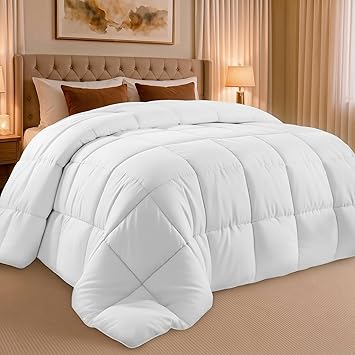
Utopia Bedding Queen Comforter Duvet Insert
Worth it, if you're buying it as an insert and not a standalone comforter
- You already own or plan to buy a duvet cover with interior ties
- You want even, all-season warmth without hot spots
- You'd rather machine wash a comforter than dry clean it

Bedsure GentleSoft Fleece Bed Blankets Queen Size Grey - Soft Warm Outdoor Picnic Fall Blanket for Camping Travel Lightweight Cozy Anti-Static
Worth it, for the right kind of cozy
- You want a lightweight throw that works year round, not just deep winter
- You need something that packs small for travel, picnics, or the car
- You're buying it as an easy, low-cost gift for home or pets
By the numbers: Utopia Bedding Queen Comforter Duvet Insert scores 4/5, Bedsure GentleSoft Fleece Bed Blankets Queen Size Grey - Soft Warm Outdoor Picnic Fall Blanket for Camping Travel Lightweight Cozy Anti-Static 5/5 on our verdict scale. Full dataset.
Comforter vs Blanket
You're standing between two shelves, one stacked with comforters, one with blankets, and the comforter vs blanket question doesn't clear up just because you're closer to the products. Both are white, both are soft, both promise warmth on the label. The difference isn't in the photo. It's in what each one is built to do once it's on your bed, not in the store.
A comforter like the Utopia Bedding insert is built to hold a shape. The box stitching quilts the fill into sections so it can't slide into one corner after a few nights, and the corner tabs exist to lock it inside a duvet cover so it stops shifting while you sleep. That's the whole mechanism: contain the loft, keep the warmth even, let the cover take the visual and cleaning burden. A blanket like the Bedsure fleece throw skips that problem entirely because there's no fill to migrate. It's a single piece of microfiber, thin enough to fold into a bag, warm enough for a couch or a car ride, but it was never meant to replace the loft of a filled comforter. One is engineered to be sealed inside something else and used on a bed every night. The other is meant to be grabbed loose and used anywhere without fuss. Confuse the two and you either end up washing a bare comforter that was built as an insert, or wondering why a throw blanket feels thin next to a proper bed layer. They're not competing products, they're doing different jobs.
Choose the comforter if
- You already own or plan to buy a duvet cover with interior ties
- You want even, all-season warmth without cold spots forming as the fill shifts
- You'd rather machine wash the whole thing than manage dry cleaning
Choose the blanket if
- You want a lightweight layer that works on the couch, in the car, or on a picnic, not just the bed
- You need something that folds small enough to travel with
- You're after a low-cost, easy gift rather than a bedding system
These aren't really rivals, they're built for different rooms of your life. The comforter is a bed system: buy it expecting to pair it with a duvet cover, and the box stitching earns its price by keeping the fill from bunching wash after wash. The blanket is a throw: buy it expecting light, portable warmth, not the sink-in weight of a filled comforter. If you need one bed layer that stays put, go comforter. If you need a grab-and-go blanket for the couch, the car, or the dog's spot on the floor, go blanket. Plain, and both do their own job well.
Before you go
Is a comforter the same as a blanket?
No. A comforter is a filled insert made to sit inside a duvet cover, held in place by box stitching and corner tabs. A blanket is a single layer with no fill to contain, meant to be used loose.
Can a comforter be used as a blanket?
Yes, if you don't mind skipping the duvet cover, but a comforter like this one is finished as an insert, so the seams and tabs are meant to be hidden, not shown on a bare bed.
Is a comforter for summer or winter?
A down-alternative fill like this one is built for all-season warmth, not just winter, so it works year round without switching bedding by season.
Full verdicts: Utopia Bedding Queen Comforter Duvet Insert · Bedsure GentleSoft Fleece Bed Blankets Queen Size Grey - Soft Warm Outdoor Picnic Fall Blanket for Camping Travel Lightweight Cozy Anti-Static