CNC Router vs Milling Machine: What's the Real Difference?

FoxAlien Masuter Pro 3-Axis CNC Router Machine
Worth it, within its power budget
- You're new to CNC and want a metal frame that holds up under normal wood, acrylic or MDF cuts
- You're willing to match feed rate and cut depth to the stock spindle instead of pushing it
- You want a machine that arrives mostly pre-wired so you're cutting the same day
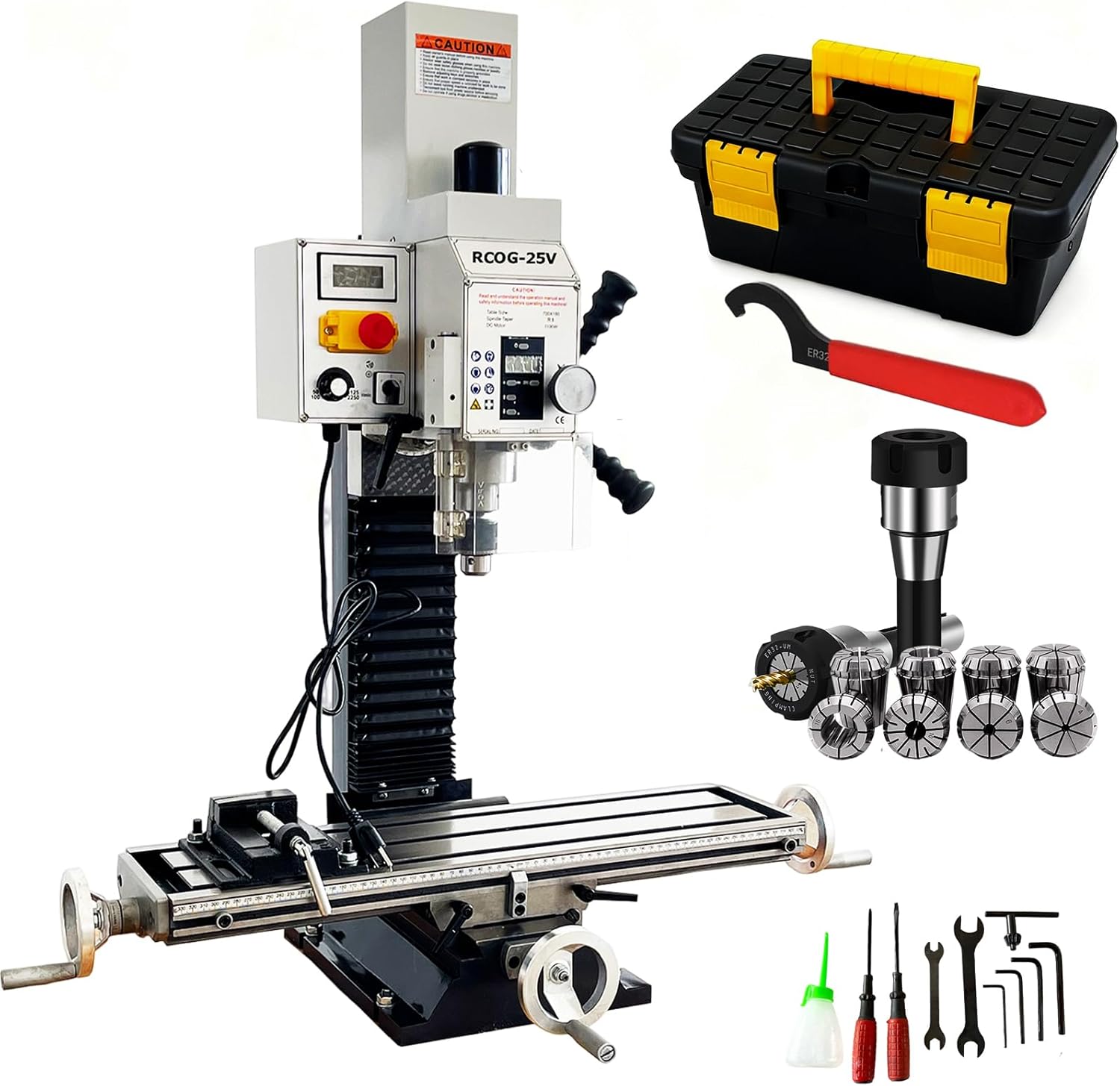
INTBUYING Benchtop Mini Milling Drilling Machine 7''x27-1/2'' Brushless Precision Mill Drill Lathe
Worth it, if you need real precision
- you need to hold real tolerances on metal, wood, or plastic parts at home
- you want one machine that drills, mills, and cuts angles instead of owning several
- you have dedicated floor space for a 320 pound benchtop tool
By the numbers: both score 4/5 on our verdict scale — the split here is audience, not quality. Full dataset.
Cnc Router vs Milling Machine
You're staring at two very different price tags for two machines that both seem to cut things, and the cnc router vs milling machine question won't resolve itself by reading spec sheets. One is a frame built to carve wood, acrylic and MDF at speed. The other is iron built to hold a metal part still enough to trust the tolerance. The photos won't tell you which job you actually have.
A CNC router like the FoxAlien moves a spindle across soft to medium material fast, riding rails that are solid enough to reward careful settings but built around a stock 60W motor with a real ceiling. Push it into dense hardwood or metal at full depth and the same rail system that impressed you starts chattering, because the frame was never asked to fight that kind of resistance. A milling machine like the INTBUYING benchtop mill makes the opposite trade. It spends its weight and its price on rigidity: a geared spindle, an R8 tool fit, and a frame heavy enough that the tool holds a line instead of arguing with the material. That's what lets it hold real tolerance on metal, wood or plastic parts, but it also means slower work, a squaring-and-setup ritual before first use, and 320 pounds of iron that wants a dedicated bench, not a shelf. The router buys you speed and reach across soft stock. The mill buys you precision and metal-cutting confidence. Neither buys you both at once.
Choose the CNC router if
- You're new to CNC and cutting wood, acrylic or MDF, not metal
- You're willing to match feed rate and depth to a 60W stock spindle instead of pushing it
- You want to be cutting the same day it arrives, not squaring a machine for hours first
- You're fine upgrading the spindle later if you outgrow it
Choose the milling machine if
- You need to hold real tolerance on metal, wood or plastic parts
- You want one machine that drills, mills and cuts angles instead of collecting three
- You have a dedicated bench for 320 pounds of iron, not a shelf
- You're ready to square and set the machine up before first use
If your projects live in wood, acrylic or MDF and you're happy to respect a stock spindle's limits, the router is the honest buy, cheap enough to learn on and metal enough to survive normal use. If your work actually needs metal parts held to a real tolerance, the router's ceiling is built in, not fixable with better settings, and the mill's extra cost and weight is what you're paying to remove. Buy for the material you cut most, not the one you might cut someday.
Before you go
Can a CNC router cut metal like a milling machine?
No, not reliably. The stock spindle on a hobby router like the FoxAlien is sized for wood, acrylic and MDF, and pushing it into metal at full depth is outside its power budget.
Is a CNC router the same as a milling machine?
No. A router trades rigidity for speed across soft stock, while a mill trades speed for the rigidity that holds real tolerance on metal, wood or plastic.
Do I need a milling machine for occasional drilling or hobby holes?
No, a dedicated mill is overbuilt for that. It earns its price on parts and tolerances, not the occasional pilot hole a cheaper drill press already handles.
Full verdicts: FoxAlien Masuter Pro 3-Axis CNC Router Machine · INTBUYING Benchtop Mini Milling Drilling Machine 7''x27-1/2'' Brushless Precision Mill Drill Lathe