Banana Boat vs Coppertone Sunscreen: Which Spray Actually Fits Your Skin?
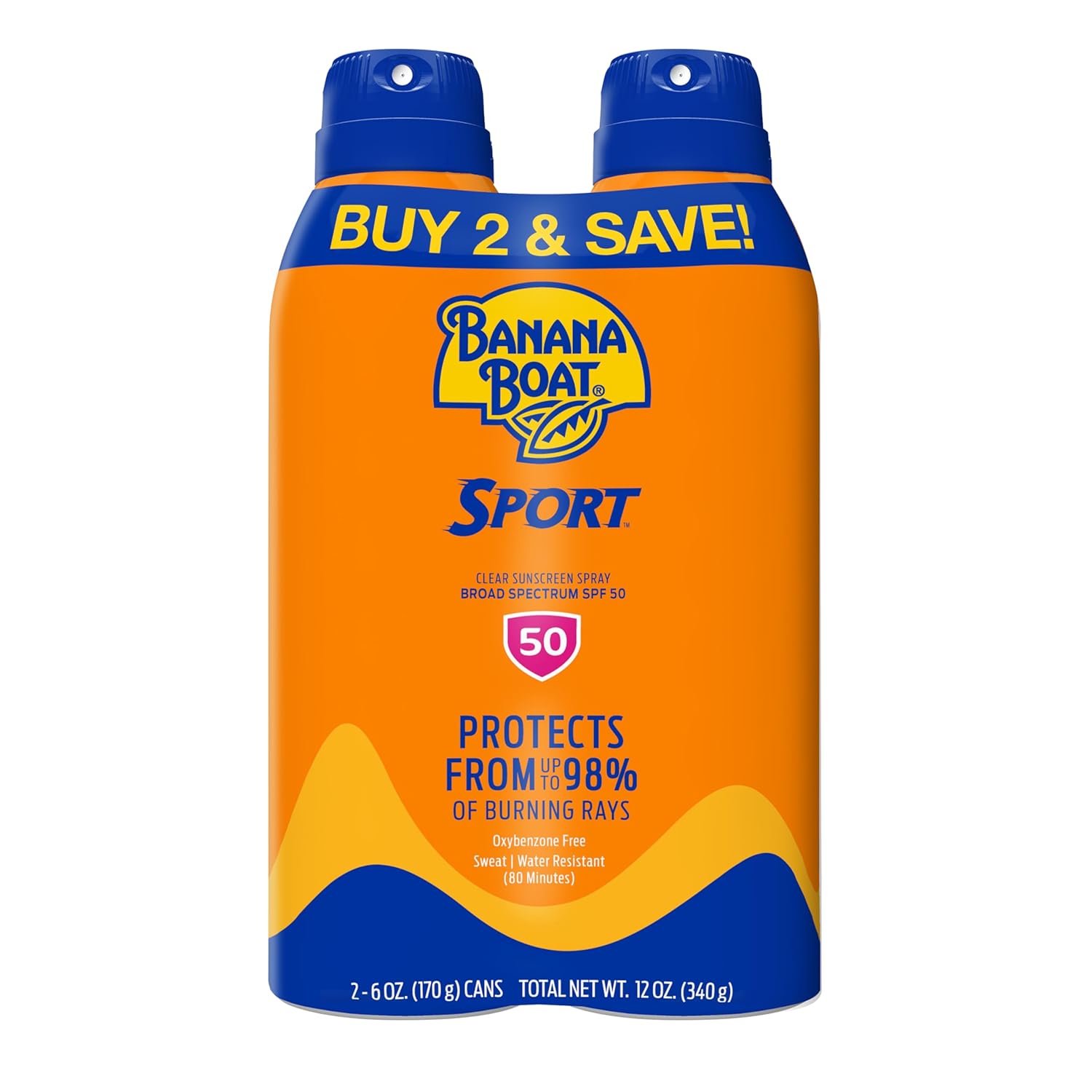
Banana Boat Sport SPF 50 Sunscreen Spray
Worth it, with a fragrance and face caveat
- you need to cover a squirming kid or your own body fast
- you're sweating or swimming for over an hour and need real reapplication
- you want scalp, ear, and neck coverage a hand-applied cream tends to miss

Coppertone SPORT Sunscreen Spray SPF 50
Worth it, if you rub in what you spray
- you want fast, hands-free coverage before swimming or sport
- 80 minutes of water resistance matters for your activity
- you prefer a formula without oxybenzone, octinoxate, PABA or dyes
By the numbers: both score 4/5 on our verdict scale — the split here is audience, not quality. Full dataset.
Banana Boat vs Coppertone Sunscreen
You're standing in the sunscreen aisle comparing two cans that both promise SPF 50 and both cost more than the lotion next to them. The banana boat vs coppertone sunscreen question isn't really about which one blocks more sun, they're both broad spectrum sprays built for the same job. It's about which formula's trade-offs match your skin, your activity, and how much wind you'll be standing in when you spray it on.
Strip away the can and both of these are the same idea: SPF 50 chemistry delivered as a spray instead of a rub-in cream, because spray gets applied faster and faster application means more actual reapplication. That's the real mechanism, not stronger sun protection, just protection you're more likely to put on and put on again. Where they split is in what's mixed into that spray. Banana Boat leans into a stronger scent, which makes it a fine choice for arms, legs, and the back of a squirming kid's neck but a rough one for your face if you're sensitive to fragrance. Coppertone drops oxybenzone, octinoxate, PABA and dyes from its formula, which matters if your skin reacts to those specific ingredients, but it doesn't change the underlying SPF chemistry, and its spray still drifts in wind the same way any spray does. Neither can shows you your coverage the way a lotion does, so both ask you to trust the spray pattern and rub in what lands. The choice isn't about efficacy, it's about which caveat you'd rather live with.
Choose the Banana Boat sunscreen if
- you're covering a moving kid or your own body fast and don't want to stand there rubbing in cream
- you're sweating or swimming past the one hour mark and need quick reapplication
- you want scalp, ear and neck coverage a hand-applied lotion tends to miss
- fragrance isn't a concern because this is going on your body, not your face
Choose the Coppertone sunscreen if
- you want the formula without oxybenzone, octinoxate, PABA or dyes for reactive skin
- 80 minutes of water resistance matches your swim or sport session
- you need fast, hands-free coverage for kids or awkward angles
- you're applying it somewhere reasonably sheltered from wind
Both of these are the same honest trade: spray-fast application in exchange for chemistry you can't watch land on your skin. If fragrance is your dealbreaker, Banana Boat is the one to skip for your face and keep for your body. If specific chemical filters are your dealbreaker, Coppertone's cleaner ingredient list is the reason to reach for it, as long as you're not spraying it into open wind. Neither wins on protection, they win on which caveat costs you less.
Before you go
Is one of these more water resistant than the other?
Coppertone's supplied water resistance runs to 80 minutes; Banana Boat is built for sweat and water resistance over longer outdoor stretches too. Neither replaces reapplying after a swim.
Which one should I put on my face?
Neither is ideal there. Banana Boat's fragrance makes it a rougher fit for facial skin, and Coppertone's spray still drifts in wind, so a plain lotion is the more honest choice for your face specifically.
Do the ingredient differences mean one blocks more UV?
No, the SPF 50 chemistry doing the actual blocking is the same either way. The ingredient list difference is about sensitivity and formulation, not strength.
Full verdicts: Banana Boat Sport SPF 50 Sunscreen Spray · Coppertone SPORT Sunscreen Spray SPF 50