Air Fryer vs Microwave Oven: Which One Do You Actually Need?

CHEFMAN 2 Qt Mini Air Fryer
Worth it, if you're cooking for one or two
- You're cooking for one or two people most nights
- You want a small footprint that doesn't eat your counter
- You mostly reheat, snack, or make quick sides rather than big batches
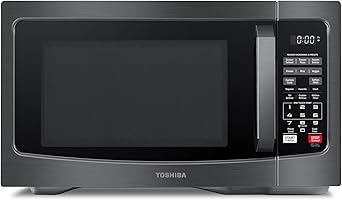
TOSHIBA EM131A5C-BS Countertop Microwave Ovens 1.2 Cu Ft
Worth it, if you reheat and defrost more than you cook
- You reheat and defrost more often than you cook from scratch
- You're tired of guessing at timer settings for different foods
- You want preset menus that take the thinking out of common meals
By the numbers: CHEFMAN 2 Qt Mini Air Fryer scores 4/5, TOSHIBA EM131A5C-BS Countertop Microwave Ovens 1.2 Cu Ft 5/5 on our verdict scale. Full dataset.
Air Fryer vs Microwave Oven
You're staring at a stretch of counter that can fit one more appliance, and you're trying to work out which one actually earns it: air fryer vs microwave oven. One promises crisp reheated leftovers, the other promises dinner without a splash of oil. They look like they're fighting for the same job, but they're not, and that's the part worth sorting out before you spend forty or a hundred and fifty dollars on the wrong tool for your actual nights.
Here's what's actually different under the hood. An air fryer moves hot air fast around a small basket, up to 400°F, so the outside of your food browns and crisps the way an oven does, just quicker, this Chefman claims up to three times faster than a full-size oven. That's why it can turn frozen fries into something crunchy in minutes. But it's also why the basket size matters more than any other spec: this one holds 2 quarts, sized for one or two portions, and shaking halfway through is part of the deal, not optional. A microwave works on a completely different principle. It heats the water inside your food directly, which is fast but never browns anything, that's just physics, not a flaw to fix. What the Toshiba adds is a humidity sensor that reads how much steam your food's giving off and adjusts time and power on its own, so you stop guessing at settings for a bowl of soup versus a frozen chicken breast. That's the real trade: the air fryer changes texture, the microwave changes how much thinking reheating requires.
Choose the air fryer if
- You're cooking for one or two people most nights
- You want a small footprint that doesn't eat your counter
- You mostly reheat, snack, or make quick sides rather than big batches
Choose the microwave oven if
- You reheat and defrost more often than you cook from scratch
- You're tired of guessing at timer settings for different foods
- You want preset menus that take the thinking out of common meals
These two aren't really rivals, they're doing different jobs, so the honest answer is about your habits, not a winner. If your week is mostly reheating leftovers, defrosting dinner, or warming soup, the microwave earns its price and its sensor does real work. If you're cooking fresh meals for one or two and want crisp texture without a bottle of oil, the air fryer is a quiet yes, as long as you're not trying to feed a family from a 2-quart basket. Most kitchens end up keeping both.
Before you go
Will an air fryer replace a microwave?
No, they solve different problems: an air fryer crisps and browns food, a microwave reheats and defrosts fast without crisping. Most kitchens end up running both side by side.
What is the downside of an air fryer?
The basket size caps how much you can cook at once, and there's no rotisserie or extra racks; batch-cooking for a family will feel cramped in a compact model like this one.
Full verdicts: CHEFMAN 2 Qt Mini Air Fryer · TOSHIBA EM131A5C-BS Countertop Microwave Ovens 1.2 Cu Ft